
 Tiếng Việt

CNC Jewelry Machine: Types, Applications, Benefits, and How to Choose the Right Equipment
The jewelry industry is evolving as manufacturers look for better ways to improve production efficiency, maintain consistent product quality, and create distinctive designs. Traditional manual processing remains important for craftsmanship, but increasing labor costs, demanding production schedules, and growing customization requirements are encouraging jewelry businesses to adopt more automated technologies.
A CNC jewelry machine is one of the technologies supporting this transformation. By using computer-controlled movements and predefined machining parameters, CNC equipment can perform accurate and repeatable operations on jewelry components and finished or semi-finished products.
However, not every jewelry CNC machine performs the same function. Some machines are designed for engraving and milling complex three-dimensional surfaces, while others specialize in diamond cutting, bead processing, wire machining, or tube surface finishing.
Understanding these differences is essential when selecting equipment for a jewelry factory, small workshop, or jewelry processing business.
In this guide, Sible explores how CNC jewelry machines work, the main equipment categories, their industrial applications, and the factors buyers should consider before investing in automated jewelry manufacturing equipment.
1. What Is a CNC Jewelry Machine?
A CNC jewelry machine is a computer-controlled machine used to process jewelry materials and components according to programmed movements, machining paths, or predefined operating parameters.
CNC stands for Computer Numerical Control. Instead of relying entirely on manual operation, the machine controls its movements through a numerical control system, helping manufacturers achieve repeatable machining results.
Depending on the machine design, its working process may involve rotating cutting tools, precision spindles, controlled workpiece positioning, specialized fixtures, or automated feeding mechanisms.
CNC technology can be applied to different jewelry manufacturing processes, including:
Engraving patterns and decorative details on jewelry surfaces.
Milling and machining flat or three-dimensional designs.
Cutting decorative facets into metal beads and tubes.
Processing wire, tubing, and round-chain components.
Producing repeatable surface textures and ornamental patterns.
Automating selected production steps to reduce manual intervention.
The appropriate machine depends on the shape of the workpiece, the required finish, the material being processed, and the production volume.
For example, a manufacturer producing intricate engraved rings may need a multi-axis CNC engraving machine. A factory processing large quantities of decorative gold wire may benefit more from a dedicated diamond cutting machine for wire and tube.
Choosing equipment according to the actual manufacturing process is more effective than selecting a machine based on the CNC label alone.
2. Main Types of CNC Jewelry Machines
CNC jewelry equipment covers several different technologies. Understanding their functions helps buyers identify the most suitable solution for their products.
2.1 CNC Jewelry Engraving and Milling Machines
CNC engraving and milling machines are designed to create decorative patterns, grooves, textures, and shaped surfaces on jewelry components.
Depending on the machine configuration, they can process rings, bangles, pendants, decorative plates, and other suitable workpieces.
Multi-axis systems can provide additional flexibility when machining curved surfaces or complex geometries. More axes do not automatically guarantee better results, however. Actual performance also depends on machine rigidity, spindle quality, tooling, workholding, control software, and operator setup.
These machines are suitable for manufacturers that require detailed surface designs, personalized products, or repeatable decorative machining.
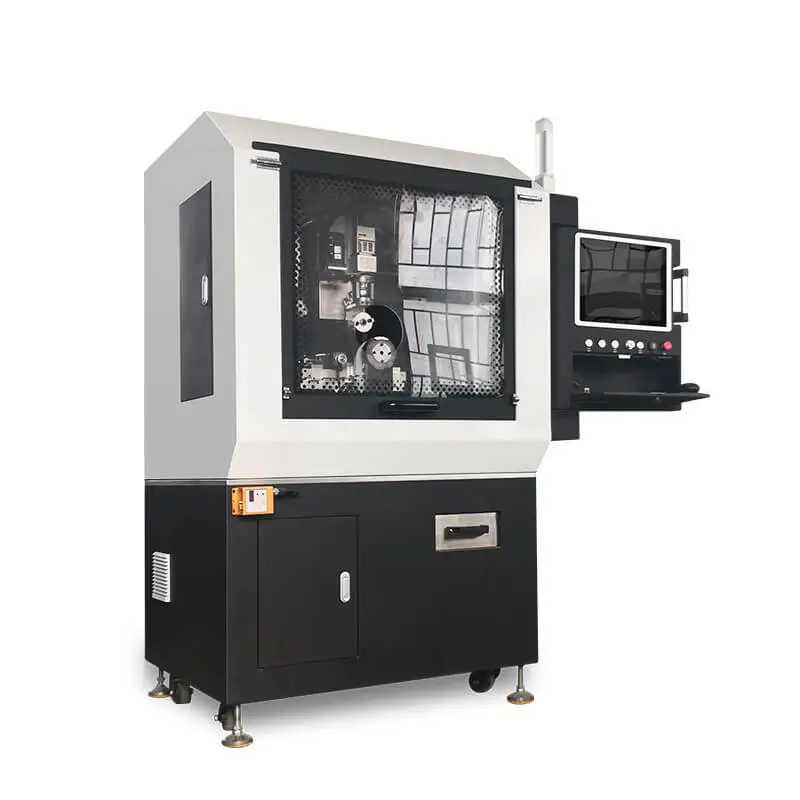
2.2 CNC Diamond Cutting Machines for Wire and Tube
Diamond cutting machines create decorative facets and reflective patterns on metal wire, tubing, and compatible chain components.
The cutting process removes controlled amounts of material from the surface, producing geometric patterns that can improve the visual appearance of jewelry components.
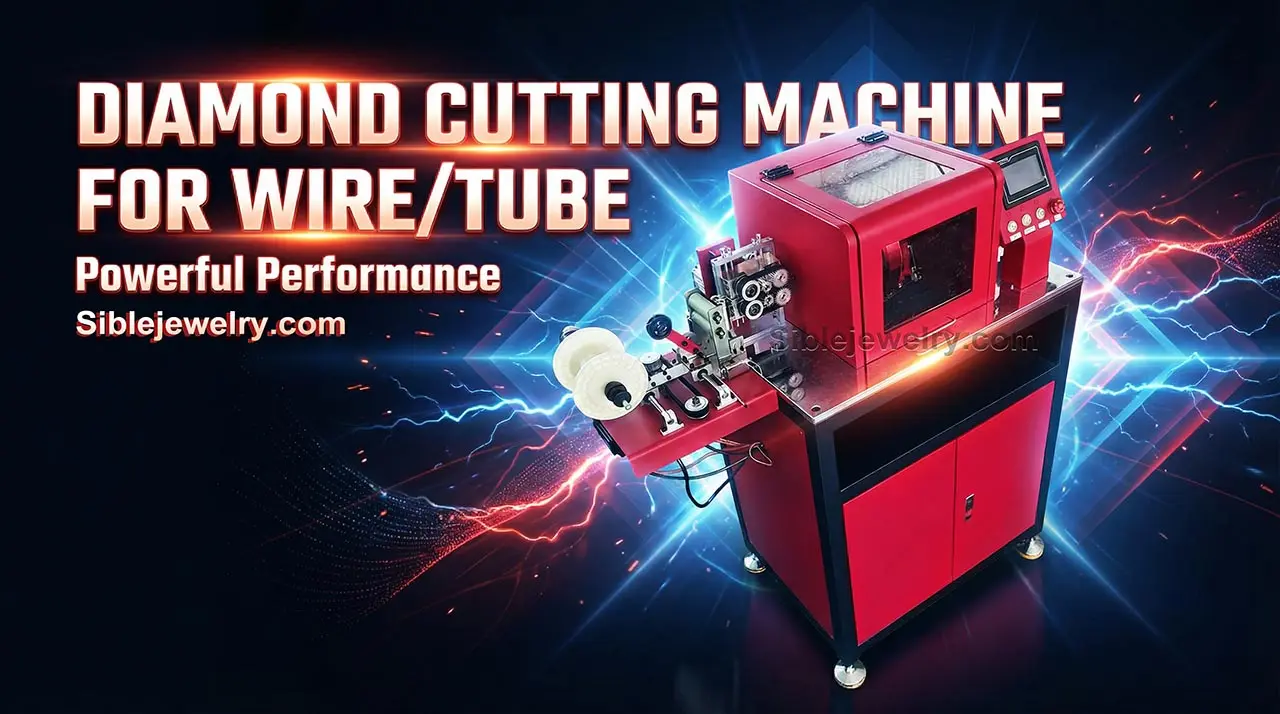
A precision diamond cutting machine for wire and tube is particularly useful for manufacturers producing decorative chain materials, patterned metal wire, and other components that require consistent surface finishing.
Key factors to evaluate include:
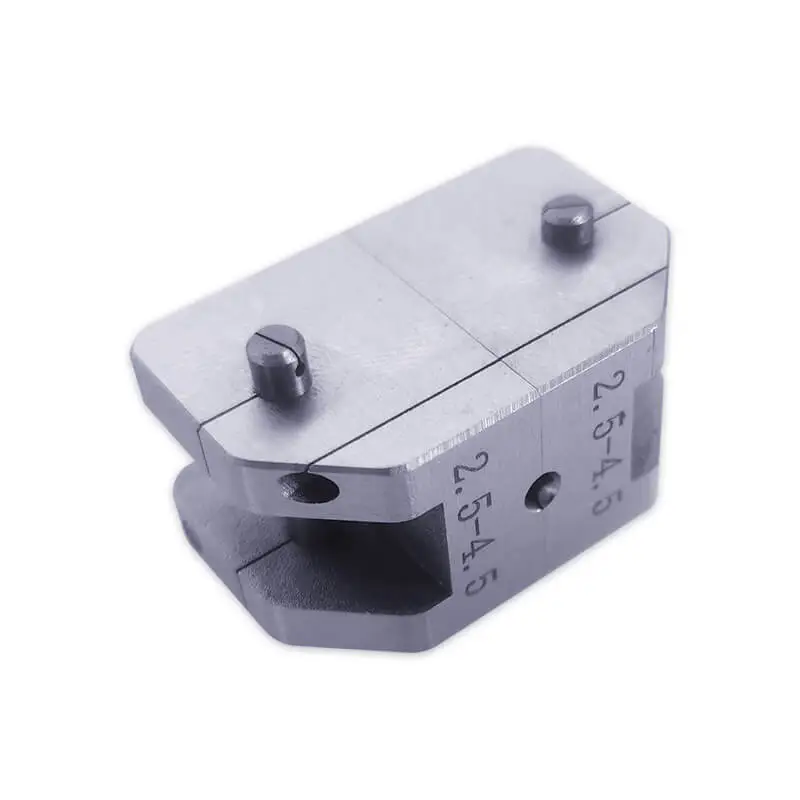
Compatible wire and tube diameters.
Material compatibility.
Cutting-tool or wire-core specifications.
Pattern consistency and surface quality.
Feeding stability and machining speed.
Ease of adjustment and maintenance.
For production environments that repeatedly process similar components, a dedicated automatic machine can simplify the workflow and reduce dependence on continuous manual handling.
Explore Sible's Diamond Cutting Machine for Wire and Tube to learn more about equipment designed for this application.
2.3 Ball and Bead Diamond Cutting Machines
Decorative beads and ball-shaped components are widely used in necklaces, bracelets, chains, and other jewelry products. Their surface finish can significantly influence the appearance of the finished piece.
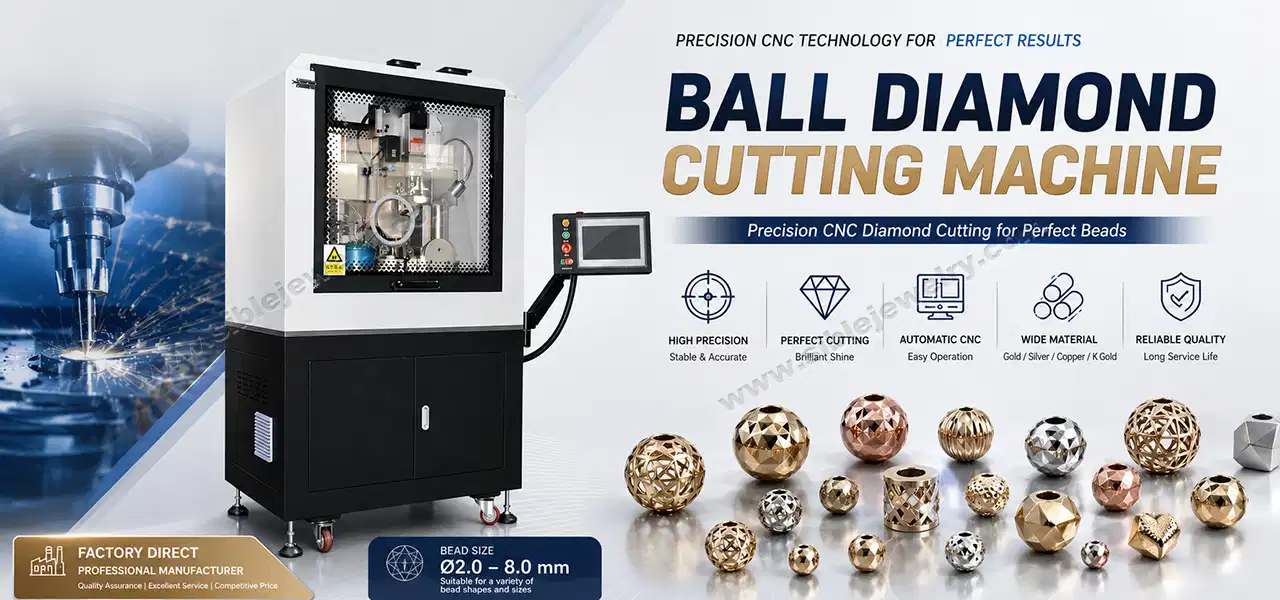
A ball diamond cutting machine is designed to create controlled facets or decorative cuts on compatible beads. Depending on the machine configuration, it may support different bead sizes, cutting patterns, and production requirements.
When evaluating this type of equipment, buyers should consider bead diameter, fixture compatibility, cutting-head configuration, adjustment requirements, and the consistency of the finished surface.
Single-head and dual-head configurations may serve different production needs. A dual-head design can offer additional processing capacity when the machine supports the intended workpieces and operating conditions.
For manufacturers producing decorative ball chains or faceted beads, dedicated bead-cutting equipment can be more appropriate than a general-purpose engraving machine.
2.4 Automatic Ball and Tube Processing Machines
Hollow balls, decorative tubes, and related components are important elements in many jewelry designs.
Automatic ball-making equipment forms hollow metal balls from suitable tube materials, while specialized ball-tube cutting machines create decorative surface patterns on compatible tubular components.
These are different operations and generally require different equipment.
An integrated production workflow may include tube preparation, ball forming, surface cutting, assembly, and finishing. The exact sequence depends on the product design and manufacturing method.
For factories producing these components in volume, specialized automation can help standardize processing steps and reduce repetitive manual work.
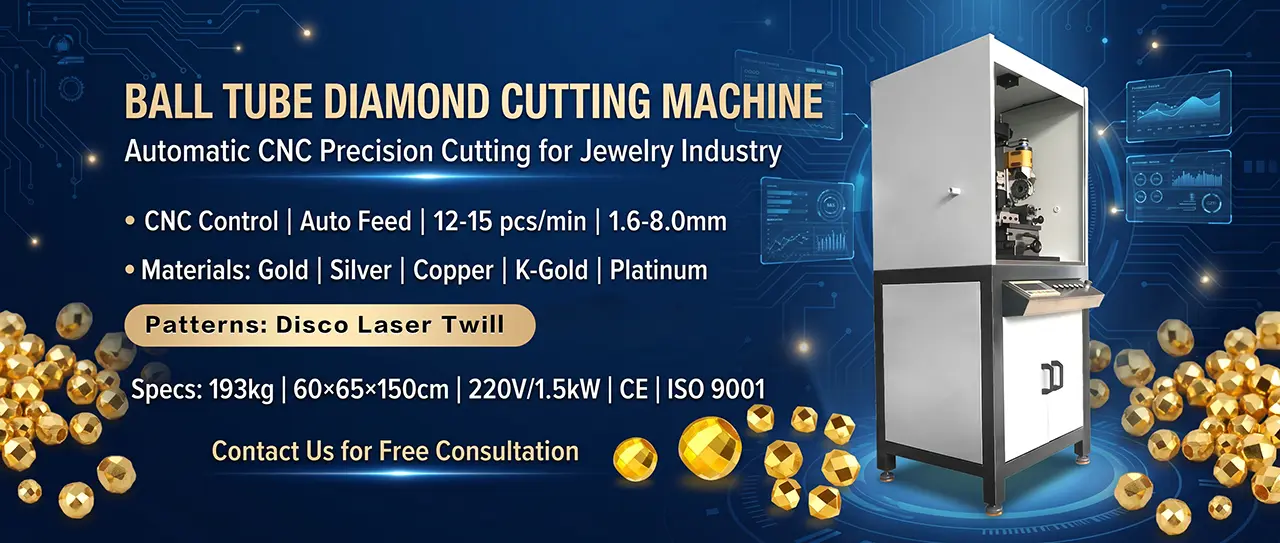
Sible offers dedicated equipment for selected applications, including its Ball Making Machine and Ball Tube Diamond Cutting Machine.
3. How Does a CNC Jewelry Machine Work?
Although the operating procedure varies by equipment type, most CNC jewelry machining processes follow a similar sequence.
Step 1: Define the Product and Processing Requirements
The manufacturer identifies the workpiece dimensions, material, desired pattern, surface finish, and production quantity.
For customized engraving, the design may begin with a CAD model or a prepared machining file. For dedicated wire and bead processing equipment, the setup may instead involve selecting a suitable tool, fixture, cutting pattern, and operating parameters.
Step 2: Prepare the Machine and Workpiece
The operator installs the appropriate tooling and secures the workpiece using a compatible fixture or feeding mechanism.
Correct alignment and secure workholding are essential. Incorrect setup can lead to uneven cutting, surface scratches, dimensional variation, or damage to the workpiece.
Step 3: Configure the Machining Parameters
Depending on the machine, the operator selects or adjusts parameters such as cutting depth, spindle speed, feed rate, tool position, and machining path.
Dedicated production machines may use preset parameters or simplified controls for recurring products.
Before starting a large batch, manufacturers should verify the setup using a test workpiece or first-piece inspection.
Step 4: Perform the Machining Operation
The CNC control system coordinates the machine's movements, while the cutting tool or processing mechanism performs the required operation.
Automatic feeding, programmable movements, and repeatable settings can reduce the need for constant manual positioning, depending on the machine's capabilities.
Step 5: Inspect the Finished Product
The processed workpiece should be checked for pattern consistency, surface quality, dimensional accuracy, and other product-specific requirements.
Tool wear, material differences, machine condition, and setup errors can affect the final result. Regular inspection and preventive maintenance remain important even with automated equipment.
4. Key Benefits of CNC Jewelry Manufacturing Equipment
4.1 More Consistent Processing
Manual operations can produce variations between operators or production batches. CNC-controlled movements and standardized settings help manufacturers reproduce established patterns more consistently.
For jewelry components with repeated decorative cuts, consistent surface appearance can simplify downstream assembly and quality control.
4.2 Higher Production Efficiency
Automation can reduce repetitive manual positioning, simplify recurring setups, and shorten selected processing steps.
The actual productivity improvement depends on the machine cycle, loading and unloading time, tooling changes, inspection requirements, and the operator's workflow.
For suitable high-volume applications, dedicated automatic equipment may also allow one operator to supervise multiple machines, subject to safety requirements and production conditions.
4.3 Greater Design Repeatability
Once the machining setup has been validated, manufacturers can reuse appropriate programs or operating parameters for subsequent batches.
This helps businesses maintain a more consistent appearance across repeated orders and reduces the effort required to reproduce established designs.
Highly customized products may still require additional programming, fixture changes, and setup work.
4.4 Reduced Dependence on Manual Operations
Automated feeding, controlled cutting, and simplified controls can reduce certain repetitive tasks.
This does not eliminate the need for skilled personnel. Operators are still responsible for setup, quality checks, tooling maintenance, troubleshooting, and safe operation.
The main advantage is that production becomes less dependent on continuous manual execution of every machining movement.
4.5 Better Production Planning
Standardized machining processes can make production times easier to estimate and help manufacturers organize orders more efficiently.
When equipment is selected according to the actual product requirements, it can also reduce unnecessary processing steps and improve coordination between production stages.
4.6 Improved Control of Precious-Metal Waste
Gold, silver, and other precious metals require careful material management.
Machining may generate chips, dust, or other recoverable residues. Appropriate machine design, collection systems, housekeeping procedures, and material-accounting practices help manufacturers manage these losses.
Material recovery performance varies by machine design and operating conditions. Buyers should verify how a particular machine collects and handles processing residues rather than assuming that all CNC systems provide the same recovery rate.
5. What Materials Can CNC Jewelry Machines Process?
Material compatibility depends on the machine, tooling, cutting parameters, workpiece geometry, and required surface finish.
Common jewelry materials include:
Gold and karat gold: Used in rings, chains, beads, bangles, and decorative components. Different alloys may require different cutting conditions.
Silver: Widely used for jewelry components and decorative products. Appropriate tooling and setup help achieve the intended surface quality.
Copper: Used in selected jewelry components, prototypes, and decorative applications. Compatibility should be confirmed for the specific equipment.
Platinum and other alloys: Some CNC jewelry machines support these materials, but buyers should verify the machine's specifications, tooling requirements, and suitability for the intended operation.
For wire and tube processing, the workpiece diameter is another critical factor. A machine designed for small-diameter wire may not be suitable for larger tubes or solid components.
Before purchasing equipment, provide the manufacturer with representative samples, material specifications, workpiece dimensions, and the desired finished appearance.
6. CNC Jewelry Machine vs. Laser Engraving Machine
CNC cutting and milling machines and laser engraving machines can both create decorative details, but they use different processing methods.
| Comparison | CNC cutting or milling | Laser engraving |
|---|---|---|
| Processing method | Mechanical cutting with a tool | Focused laser energy |
| Material removal | Removes material through cutting | Marks, ablates, or modifies the surface depending on settings |
| Typical applications | Faceting, grooves, milling, and selected 3D machining | Logos, text, fine markings, and selected decorative patterns |
| Tool contact | Mechanical tool contacts the workpiece | No mechanical cutting-tool contact with the surface |
| Main considerations | Tool wear, fixtures, cutting parameters, and chip collection | Laser type, power, material response, focus, and surface finish |
Neither technology is universally better. The correct choice depends on the required finish and manufacturing process.
For example, a manufacturer producing mechanically cut reflective facets on gold wire may require a dedicated diamond cutting machine. A business adding logos or serial numbers to finished jewelry may prefer laser marking equipment.
Some production lines benefit from using both technologies for different stages of manufacturing.
7. How to Choose the Right CNC Jewelry Machine
Selecting suitable equipment requires more than comparing purchase prices or advertised machining accuracy.
Define Your Main Product
Start with the products you manufacture most frequently. Are you producing engraved rings, patterned wire, hollow beads, ball chains, decorative tubes, or a mixture of components?
The product geometry determines which machining method is appropriate.
Confirm Material and Size Compatibility
Ask the manufacturer to confirm the supported materials, workpiece dimensions, processing range, tooling requirements, and any necessary accessories.
If your factory processes multiple sizes, check whether the same fixture supports them or whether size-specific tooling is required.
Evaluate the Required Surface Finish
Different machines create different surface effects. CNC milling, mechanical diamond cutting, and laser marking should not be treated as interchangeable processes.
Provide sample products or reference images so the supplier can assess whether the proposed machine can achieve your target result.
Compare Production Capacity
Consider the complete production cycle rather than machining speed alone.
Loading, unloading, tool changes, fixture adjustments, quality inspection, and routine maintenance all affect actual output.
For batch production, ask about repeatability, changeover time, and how the machine performs during extended operation.
Review Operating Costs
The total cost of ownership includes more than the initial machine price. Important factors include tooling, consumables, electricity, maintenance, training, spare parts, and material waste.
A machine with a higher purchase price may be worthwhile if it delivers measurable improvements in output or reduces recurring production costs. These benefits should be evaluated against your actual production requirements.
Check Training and After-Sales Support
Reliable technical support can make a significant difference when introducing new equipment.
Before purchasing, clarify installation requirements, operator training, troubleshooting support, spare-parts availability, and maintenance procedures.
For overseas buyers, also confirm shipping arrangements, electrical requirements, documentation, and remote technical assistance.
8. Sible: Automated Equipment for Jewelry Processing
Sible focuses on jewelry processing machinery designed to help manufacturers improve production efficiency, simplify repetitive operations, and achieve consistent processing results.
Rather than treating every jewelry application as a single machining task, Sible provides specialized equipment for selected production processes.
Its equipment portfolio includes solutions for wire and tube diamond cutting, ball-tube diamond cutting, and automatic ball making.
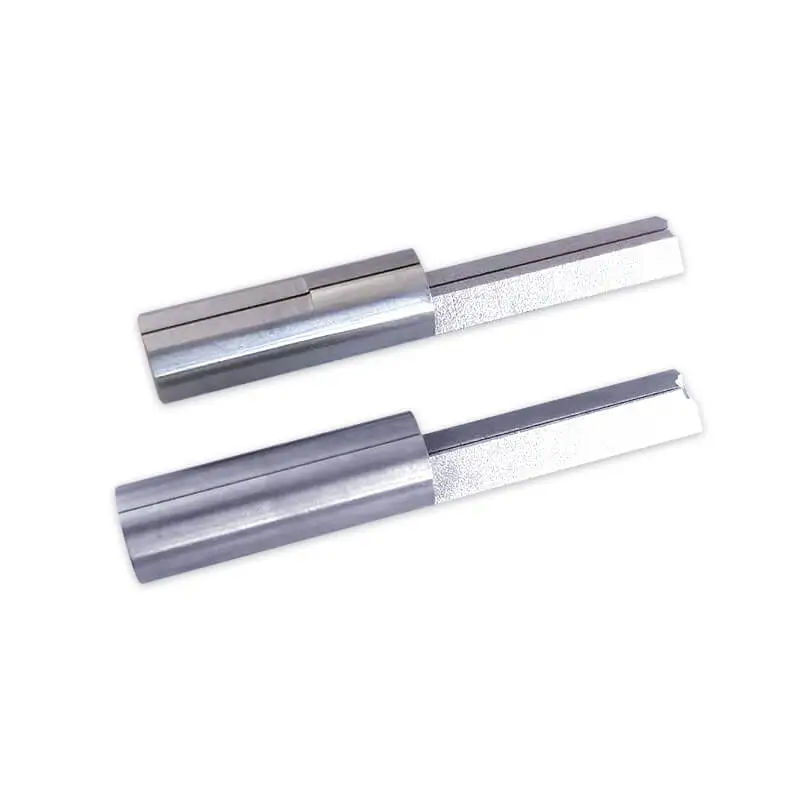
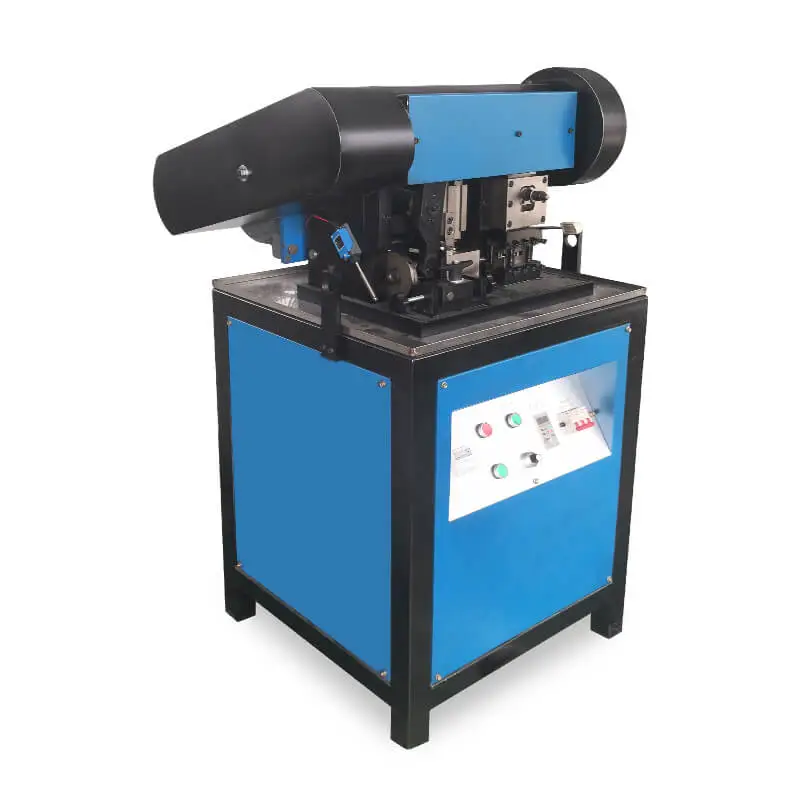
Diamond Cutting Machine for Wire and Tube
Designed for compatible wire, tube, and round-chain applications, this machine supports decorative surface cutting for jewelry manufacturing.
When assessing a wire and tube cutting machine, manufacturers should consider the required diameter range, material compatibility, cutting pattern, feeding stability, and tooling setup.
Learn more about the Sible Diamond Cutting Machine for Wire and Tube.
Ball Tube Diamond Cutting Machine
Ball-tube diamond cutting equipment is designed for manufacturers who need decorative cutting on compatible tubular bead components.
Workpiece size, fixture selection, alignment, and cutting parameters are important factors in achieving repeatable results.
Explore the Sible Ball Tube Diamond Cutting Machine for more information.
Automatic Ball Making Machine
Hollow ball production involves forming suitable metal tube material into consistent spherical components.
An automatic ball-making machine can standardize this forming process and reduce repetitive manual operations, helping manufacturers organize production more efficiently.
View the Sible Ball Making Machine to learn more about this application.
For jewelry factories, small production studios, and equipment distributors, selecting specialized machinery according to the product and production process can be a practical way to build an efficient manufacturing workflow.
9. Frequently Asked Questions About CNC Jewelry Machines
What is a CNC jewelry machine used for?
A CNC jewelry machine uses computer-controlled or programmable operations to process jewelry components. Depending on its design, it may perform engraving, milling, decorative cutting, faceting, drilling, or other specialized operations.
Can a CNC jewelry machine process gold and silver?
Some CNC jewelry machines are designed for gold, silver, and compatible alloys. Material suitability depends on the machine's specifications, tooling, workpiece dimensions, and processing method. Always confirm compatibility with the equipment supplier.
Is a CNC jewelry machine suitable for small workshops?
Yes. Certain compact CNC machines and dedicated automatic jewelry processing machines are suitable for small workshops and studios. The best option depends on available space, budget, operator skills, and the type and quantity of products being manufactured.
What is the difference between a CNC engraving machine and a diamond cutting machine?
A CNC engraving machine typically creates designs, grooves, or textures through controlled tool movements. A diamond cutting machine is designed for specific cutting operations that produce decorative facets or patterns on compatible workpieces. Their applications may overlap in some areas, but they are not automatically interchangeable.
How do I choose between a single-head and dual-head bead-cutting machine?
Consider your bead dimensions, cutting requirements, expected production volume, and required changeover flexibility. A dual-head machine may provide greater processing capacity in suitable applications, but actual output depends on its configuration and operating conditions. Request a demonstration using your own workpieces whenever possible.
What should I prepare before requesting a quotation?
Prepare the workpiece material, dimensions, sample photographs, target surface finish, expected daily or monthly output, and any special production requirements. These details help the supplier recommend an appropriate machine configuration and identify any additional fixtures or tooling needed.
Does buying a CNC jewelry machine eliminate manual labor?
Not completely. Automation can reduce repetitive processing and manual positioning, but machine setup, inspection, maintenance, material handling, and troubleshooting may still require operator involvement. The level of automation varies by machine model and production workflow.
Conclusion: Build a More Efficient Jewelry Production Process
CNC jewelry machines give manufacturers more options for producing consistent decorative details, machining complex surfaces, and automating selected manufacturing operations.
The key to choosing the right equipment is understanding the difference between general-purpose CNC engraving and milling systems and specialized machines designed for particular jewelry components.
For manufacturers processing decorative wire, tubes, hollow balls, and ball-tube components, dedicated equipment may offer a more direct solution to specific production requirements.
Sible provides specialized jewelry processing machinery for these applications, helping businesses evaluate equipment according to workpiece geometry, production needs, and processing objectives.
Looking for a suitable jewelry processing machine? Visit Sible Jewelry Equipment to explore the available solutions. Contact the Sible team with your product samples, material specifications, and production requirements to discuss suitable equipment for your manufacturing process.
Message Online


