
 Tiếng Việt


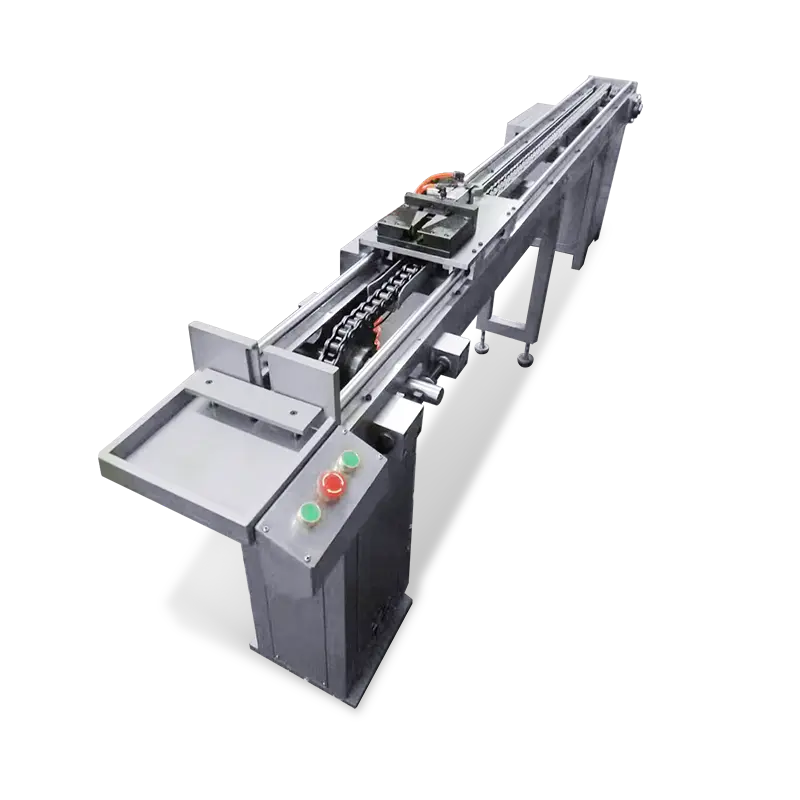
Tube Drawing Machine
1. What is a Tube Drawing Machine?
A tube drawing machine is a key piece of equipment used for the cold working of metal tubes. The fundamental principle involves pulling a tube shell through a die at room temperature using an external force. This process reduces the outer diameter, adjusts the wall thickness, and results in higher dimensional accuracy and a smoother surface finish.
Compared to cold rolling, the cold drawing process offers greater production flexibility and simpler equipment and tooling manufacturing. It is particularly suitable for producing high-precision tubes in small batches and multiple specifications.
2. Core Process Types & Configurations
To meet the varying requirements of different materials (such as copper, stainless steel, carbon steel, and aluminum) and precision levels, modern tube drawing machines typically support several drawing methods:
Tube Sinking: No mandrel is used; only the outer diameter is reduced. This is mainly used for tubes that only require outer diameter adjustment.
Fixed Mandrel Drawing: A fixed mandrel is placed inside the tube, allowing for precise control of both the outer diameter and wall thickness simultaneously. This is one of the most widely used methods for precision drawing.
Floating Mandrel Drawing: The mandrel self-positions during the drawing process, resulting in lower friction. It is often used for producing extra-long tubes (which can reach over 100 meters).
Moving Mandrel Drawing: The mandrel moves along with the tube, significantly reducing drawing force and improving the inner surface roughness. However, this requires an additional mandrel stripping process afterward.
3. Key Components & Automation Advantages
Modern high-performance tube drawing machines (such as hydraulic or chain types) typically integrate highly automated control systems:
Hydraulic Drive System: Compared to traditional mechanical drawing, hydraulic systems provide smoother pulling force and allow for precise adjustment of drawing speed and force. This makes them ideal for high-strength alloys or thick-walled tubes.
PLC & Touch Screen Control: All machine actions (such as clamping, drawing, and unloading) are logically controlled by a PLC. Operators can set process parameters (like drawing force and speed) via the touch screen and store recipes for quick changeovers.
Automatic Loading & Storage: Automated drawing lines are usually equipped with automatic feeding devices and side storage racks. Finished tubes are automatically unloaded, ensuring a continuous production cycle and significantly boosting capacity.
4. Why Choose Our Tube Drawing Machines?
High Precision & Consistency: Through precise die matching and stable hydraulic pulling force control, we ensure wall thickness uniformity and roundness for every batch of tubes.
Broad Material Adaptability: Our equipment can be customized for copper, stainless steel, carbon steel, and aluminum tubes, meeting diverse needs from heat exchanger tubes to structural tubes.
Improved Material Utilization: The cold drawing process effectively reduces machining allowances for subsequent steps, minimizing raw material waste and improving yield.
5. FAQ
Q: What is the difference between a tube drawing machine and a cold rolling mill?
A: Cold rolling typically offers a larger reduction per pass and is suitable for high-volume production, but it requires higher capital investment and slower specification changes. Drawing machines offer greater flexibility, making them highly suitable for small-to-medium batch production of precision tubes with multiple specifications, and their tooling manufacturing is simpler.
Q: What lengths of tubes can the equipment handle?
A: Depending on the model (e.g., chain type or hydraulic cylinder type), standard drawing lengths can range from several meters to tens of meters. If a floating mandrel combined with a coiler is used, extra-long tubes of over a hundred meters can be processed.
Q: Do you support custom configurations?
A: Yes. We can provide customized drawing line configurations based on your specific tube diameter range, material (such as stainless steel or copper alloy), and automation requirements.

Get Factory-Direct Quote


