
 Tiếng Việt

Wire Drawing Machine for Jewelry: A Complete Guide
What Is a Wire Drawing Machine for Jewelry?
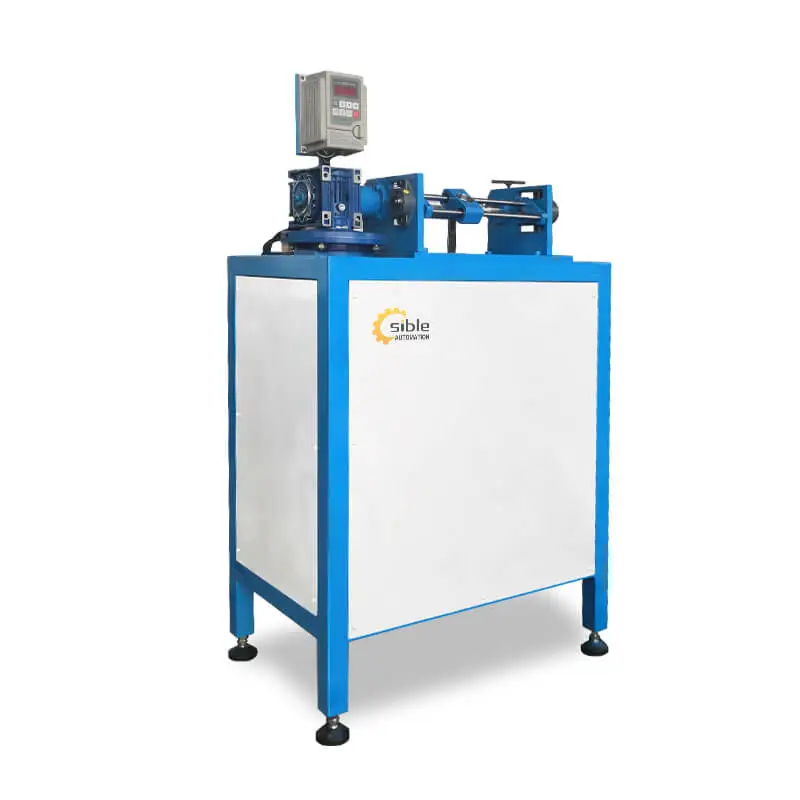
A wire drawing machine is a piece of jewelry manufacturing equipment that pulls metal wire through progressively smaller dies to reduce its diameter and improve its surface quality. In jewelry production, wire drawing machines process gold, silver, copper, brass and other precious metals into the fine, uniform wires used for chains, findings, rings, bangles and decorative elements.
The core principle is simple: a metal rod or thick wire is pulled through a series of dies — each slightly smaller than the last — until it reaches the target diameter. The result is wire with a consistent cross-section, smooth surface and improved tensile strength, ready for further jewelry processing.
Why Wire Drawing Quality Matters in Jewelry Production
The quality of your drawn wire directly affects every downstream process:
Chain making: uneven wire produces inconsistent chain links
Diamond cutting: surface defects on wire cause poor cutting results
Bead making: wire diameter variation leads to rejected beads
Soldering and welding: impurities and uneven surfaces weaken joints
Cost control: poor drawing wastes precious metal through scrap and rework
For jewelry manufacturers, a reliable wire drawing machine is not optional — it is the foundation of consistent production quality.
How a Jewelry Wire Drawing Machine Works
The Drawing Process Step by Step
Material preparation: annealed metal rod or thick wire is loaded into the machine
Die string setup: the wire passes through a sequence of dies with decreasing hole sizes
Traction: capstan wheels or straight-line pullers draw the wire through each die
Lubrication: drawing compound reduces friction and protects both wire and dies
Recoiling: the finished wire is wound onto spools or coils for the next process
Key Machine Types
| Type | Application | Best For |
|---|---|---|
| Single-die drawing machine | Simple diameter reduction | Small workshops, occasional use |
| Multi-pass (capstan) machine | Progressive reduction in one pass | Medium-volume production |
| Straight-line drawing machine | High precision, low tension variation | Fine wire, quality-critical products |
| Fine wire drawing machine | Very fine diameters (0.05-0.5mm) | Chain making, delicate findings |
What to Look For in a Wire Drawing Machine
1. Diameter Range and Reduction Ratio
The machine must cover your production range. Ask about:
Maximum input diameter (starting rod/wire size)
Minimum achievable output diameter
Number of drawing passes and reduction per pass
Whether it handles your metals (gold, silver, copper, brass, K-gold)
2. Speed Control and Tension
Consistent tension prevents wire breakage and diameter variation. Look for:
Variable speed control (inverter or servo drive)
Automatic tension compensation
Smooth acceleration and deceleration
3. Die and Lubrication System
Dies are the heart of wire drawing:
Compatible die types: PCD (polycrystalline diamond) and tungsten carbide dies
Automatic lubrication system to extend die life
Easy die change for different diameters
4. Build Quality and Durability
A wire drawing machine runs continuously in production:
Robust capstan and gearbox construction
Quality bearings and wear parts
Cooling system for long-running operation
Easy maintenance access
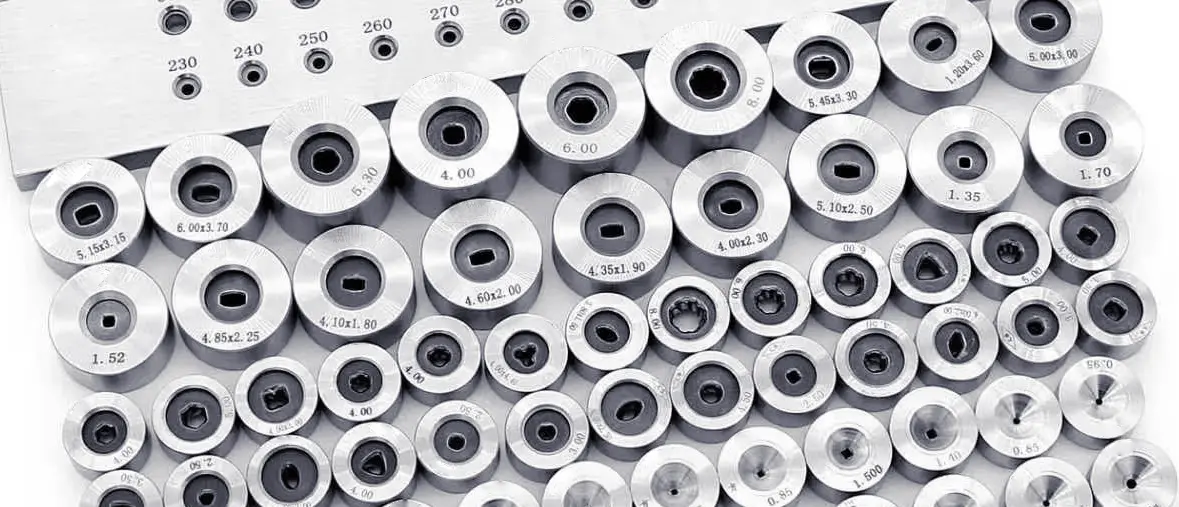
PCD Dies: The Partner Component for Wire Drawing
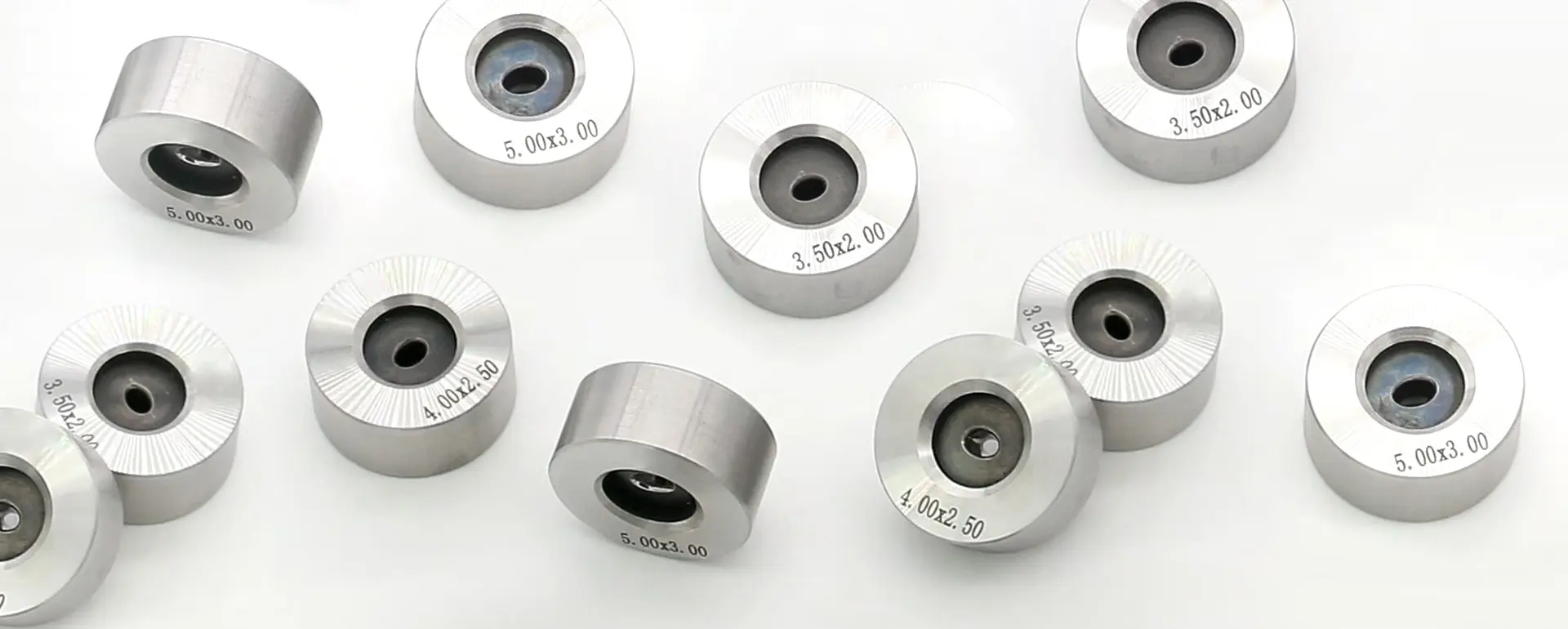
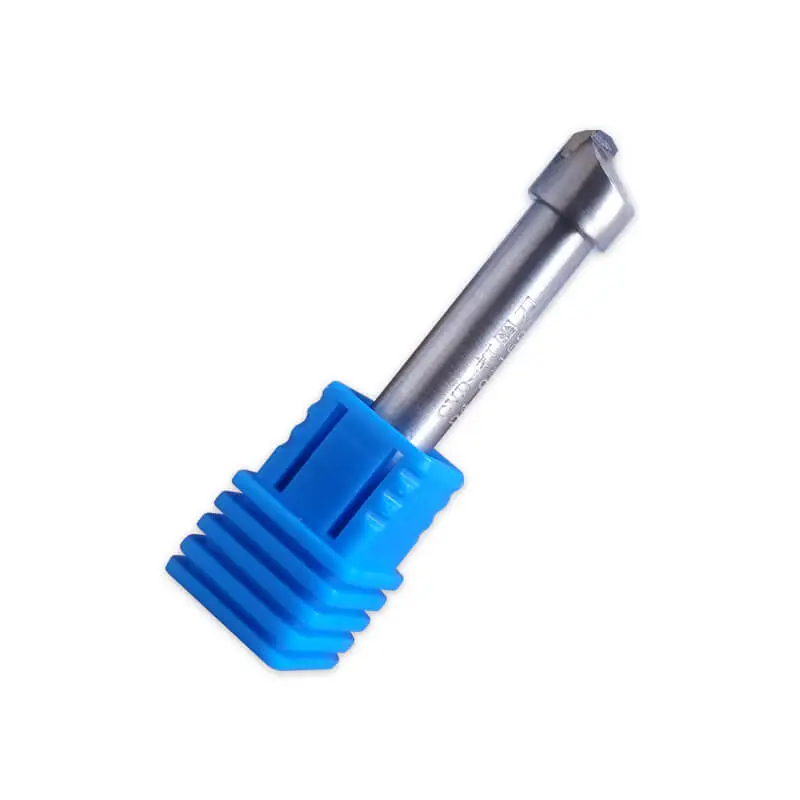
High-quality wire drawing starts with high-quality dies. PCD (polycrystalline diamond) dies are the industry standard for precious metal wire drawing because they offer:
Exceptional wear resistance: much longer life than steel or carbide dies
Consistent hole geometry: stable wire diameter over thousands of meters
Superior surface finish: smoother wire surface, fewer defects
Lower friction: less lubrication needed, less heat generation
Browse PCD wire drawing dies →
When evaluating a wire drawing setup, always check the die quality — it is the component that wears first and affects output quality most.
Wire Drawing vs. Other Jewelry Wire Processing
Wire drawing is often confused with related processes. Here is the distinction:
Wire drawing: reduces diameter by pulling through dies
Wire forming: bends and shapes wire into forms (rings, jump rings, findings)
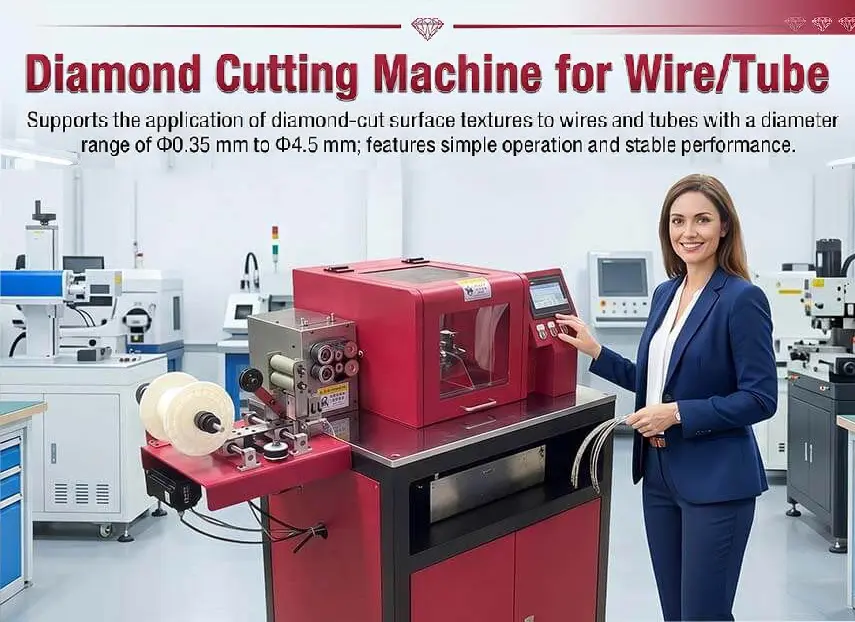
Wire cutting: cuts wire or tube to length with diamond tools
Wire coiling: winds wire into coils or springs
See wire and tube diamond cutting machines →
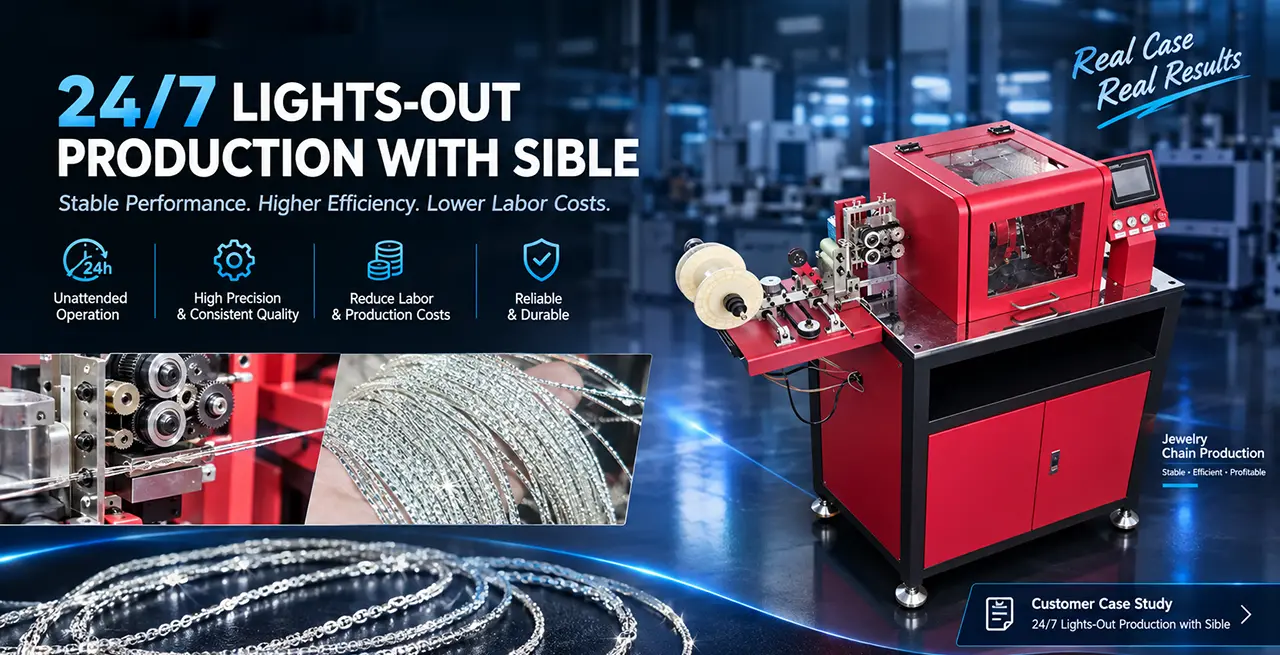
Many jewelry factories run wire drawing, cutting and forming as a continuous production line.
Common Wire Drawing Problems and Solutions
| Problem | Cause | Solution |
| Wire breakage | Excessive reduction per pass | Add more passes, reduce reduction ratio |
| Diameter variation | Worn die or unstable tension | Replace die, check tension control |
| Poor surface finish | Insufficient lubrication | Improve lubrication, check compound quality |
| Die wear too fast | Wrong die material for metal | Use PCD dies for precious metals |
| Wire overheating | Speed too high, no cooling | Reduce speed, check cooling system |
Is a Wire Drawing Machine Right for Your Workshop?
Consider a wire drawing machine if you:
[ ] Currently buy pre-drawn wire and want to control costs and quality
[ ] Need custom wire diameters not available from suppliers
[ ] Produce chains, findings or beads in-house
[ ] Want to reduce precious metal waste from inconsistent wire
[ ] Are expanding from manual to automated jewelry production
For small-batch jewelry studios, a compact single-die machine may be sufficient. For factories producing chains or beads at scale, a multi-pass machine with PCD dies is the practical choice.
Getting Started
Every jewelry factory's wire drawing needs are different — metals, diameters, volumes and downstream processes all matter. The right machine configuration depends on your specific production.
? Tell us about your wire requirements (metal type, input and output diameters, daily volume) through the contact page, and we'll help you select the right wire drawing solution for your workshop.
SIBLE Jewelry Machinery — precision equipment for jewelry manufacturers worldwide.
Message Online


