
 Tiếng Việt

Case Study: 24/7 Lights-Out Production with SIBLE
Running a jewelry workshop isn't easy. Machines break down, quality varies between shifts, and skilled operators are hard to find — especially when you're trying to scale from a small team to full production capacity.
This is exactly the problem one of our clients faced. Based in Southeast Asia, they were producing gold and silver beads for export but struggled with consistency across their two-shift operation. Manual processes meant different operators got different results, and downtime between shifts ate into their output.
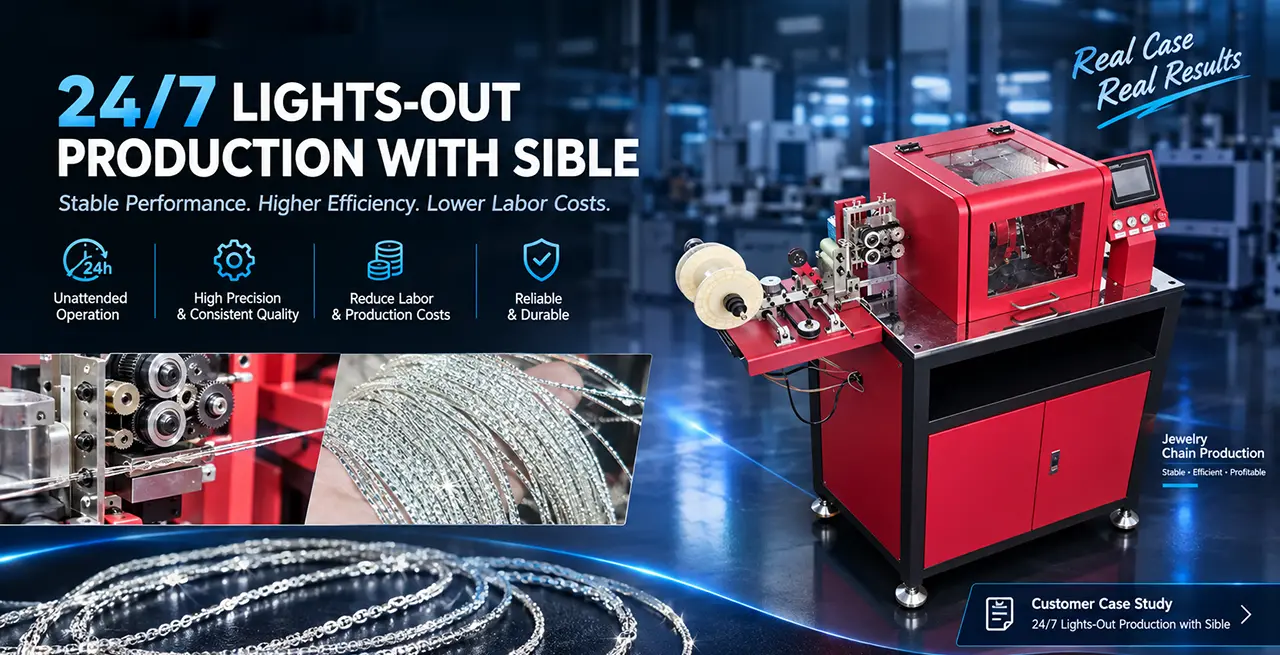
They reached out to us looking for a solution that could run unattended — literally lights-out production — while maintaining the precision their customers expect.
The Challenge
Before switching to SIBLE equipment, this client was running a mixed setup: some imported machines, some locally sourced, and a lot of manual intervention. The problems were clear:
| Issue | Impact |
|---|---|
| Inconsistent cut quality | High rejection rate on premium orders |
| Shift changeovers | 30-45 minutes of downtime per transition |
| Operator skill dependency | Quality varied between day and night shifts |
| Limited capacity | Couldn't scale without hiring more trained staff |
The turning point came when a key customer increased their order volume by 40%. The existing setup simply couldn't handle it without major changes.
The Solution
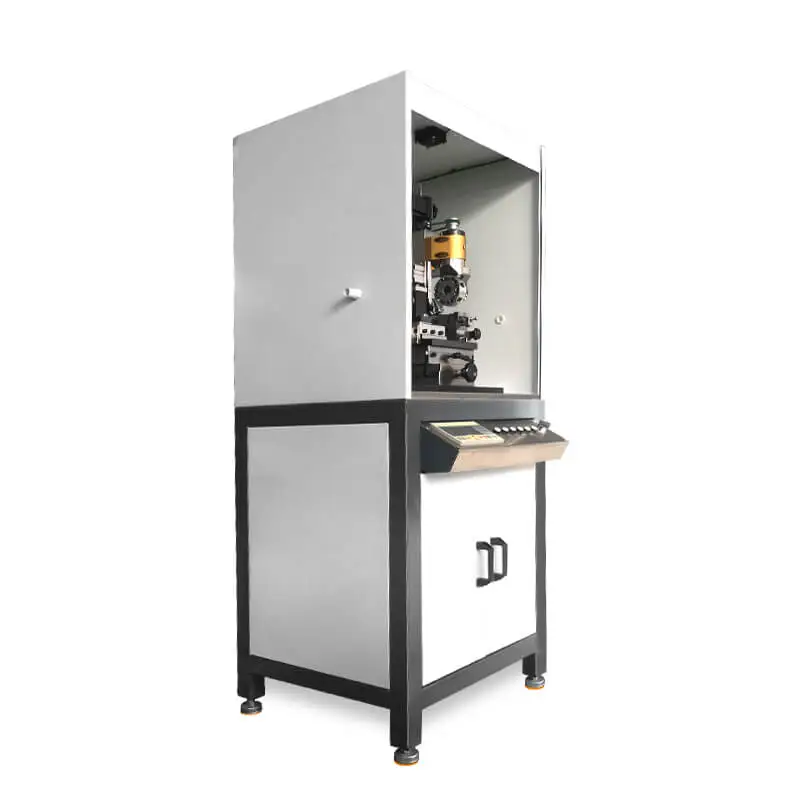
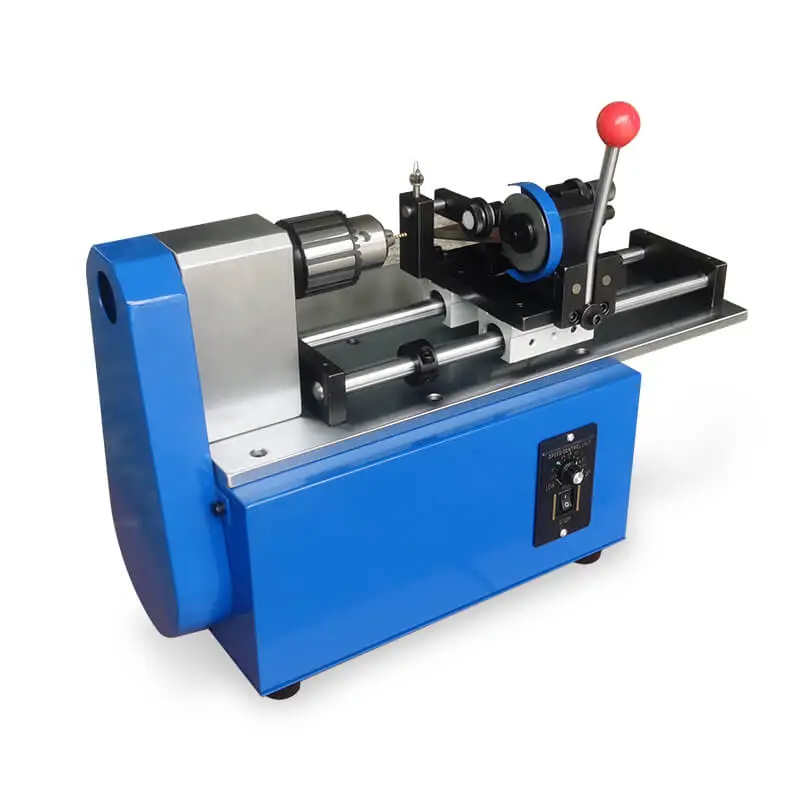
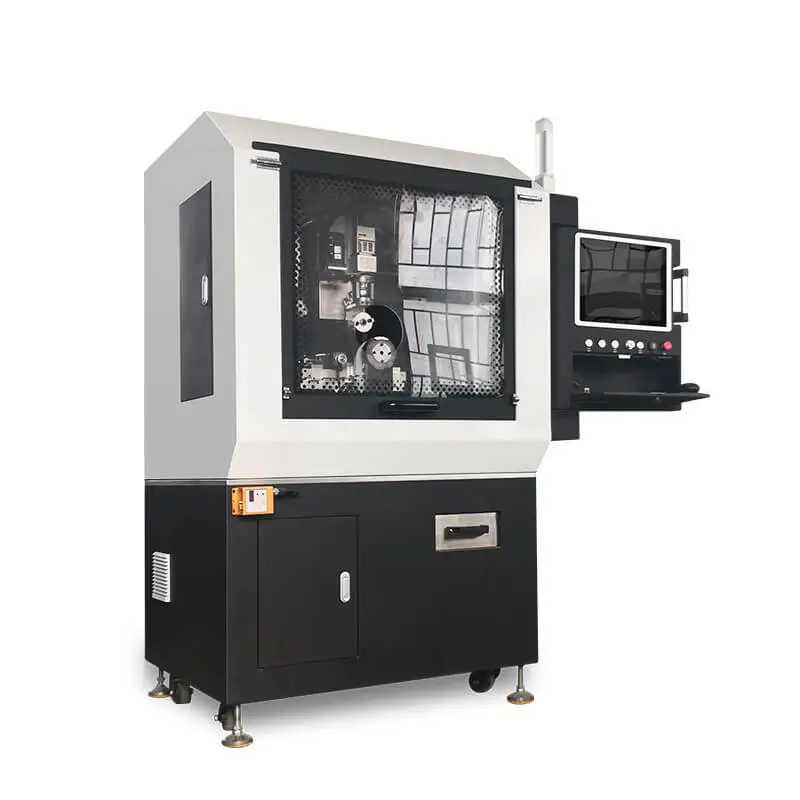
We recommended a configuration built around our automatic bead cutting machines and diamond cutting platforms, designed specifically for unattended operation:
Core equipment:
Automatic bead cutting machine × 2 units
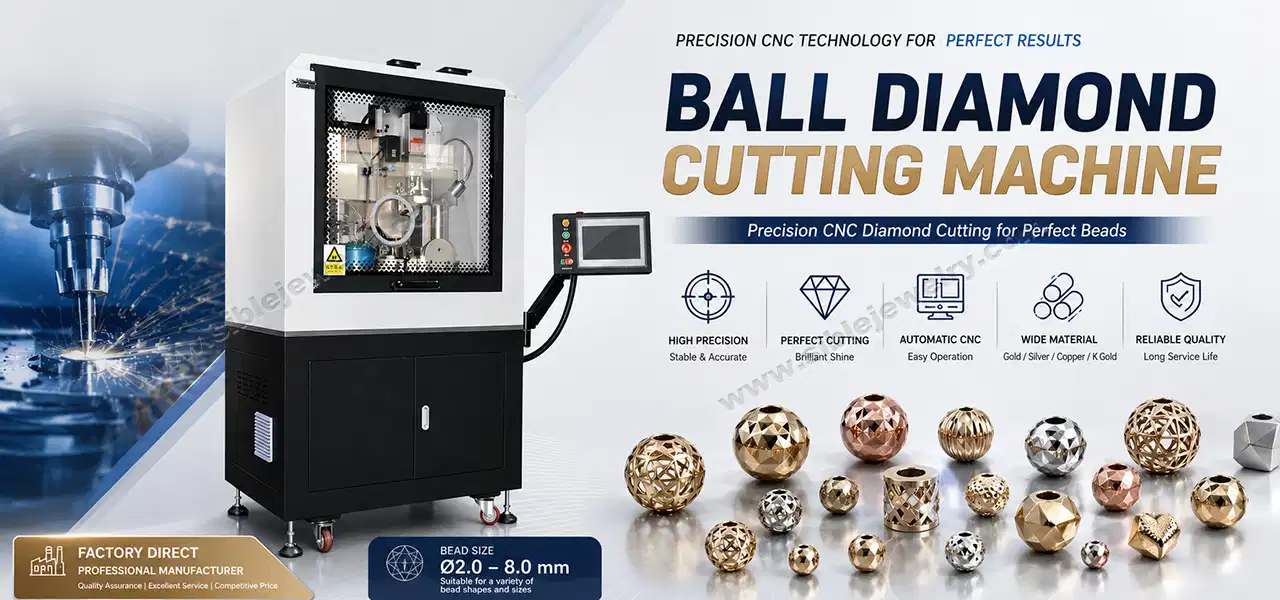
Ball diamond cutting machine × 1 unit
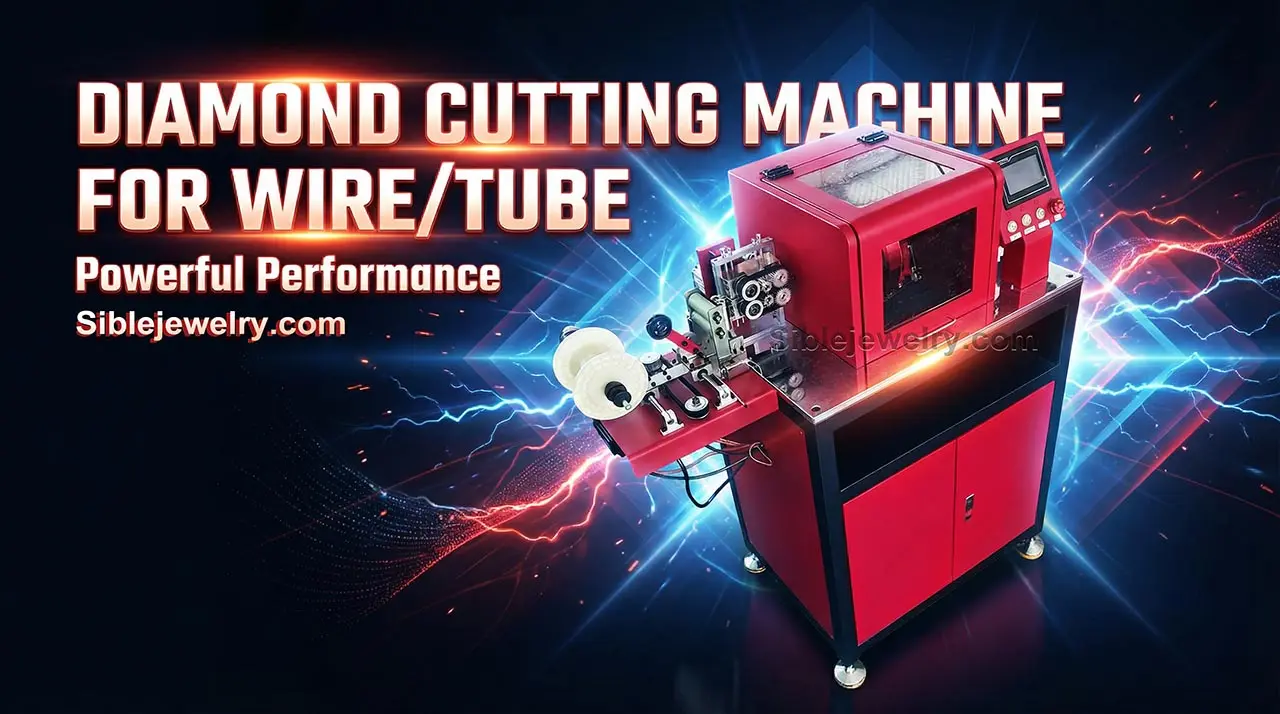
Tube diamond cutting machine × 1 unit
Supporting wire feeding and collection system
Key design choices:
Automatic material feeding reduces operator intervention
Consistent spindle speed and feed rate programming ensures repeatable results
Simple HMI interface means minimal training required
Modular layout allows expansion as demand grows
The Results
After installation and commissioning, the client saw measurable improvements within the first month:
Production metrics:
Throughput increased by approximately 60% compared to the previous manual setup
Rejection rate dropped from an estimated 8-10% to under 3%
Shift changeover time reduced from 30-45 minutes to under 5 minutes (mostly material loading)
One operator can now supervise multiple machines simultaneously
Operational benefits:
Night shift production matches day shift quality — no skill gap
Predictable output allows better order commitment to customers
Reduced reliance on specialized labor in a tight market
Easier to scale: adding another unit doesn't require proportional staffing increases
Why This Matters
Lights-out production isn't about replacing people — it's about removing variability. When your process depends on operator skill, you're limited by how many skilled workers you can hire and train. Automation levels the playing field.
For jewelry manufacturers serving international buyers, consistency matters more than speed. A customer who receives uniform quality batch after batch will reorder. One who gets variability will look elsewhere.
This client moved from struggling to meet orders to confidently quoting larger volumes — because their production became predictable.
Looking Ahead
The client is now planning to add a second production line, this time focused on decorative wire work. The modular approach we used makes expansion straightforward — new machines integrate with existing control systems, and operators already understand the workflow.
If you're facing similar challenges — inconsistent quality, limited capacity, or difficulty scaling — let's discuss your specific application. Every jewelry product has different requirements, and the right machine configuration depends on your materials, dimensions, and volume targets.
Contact SIBLE Jewelry Machinery for a technical consultation.
---

Message Online


