
 Tiếng Việt

Ball Bead Sizes & Shapes: A Visual Guide for Jewelry Manufacturers

Bead size and shape are the first decisions in any jewelry production run â and the ones that determine your metal cost, your machine selection, and what your finished pieces look like. A 2mm micro bead and a 12mm statement bead are made by different processes, need different tooling, and carry very different profit margins.
In today's gold jewelry market, lightweight hollow beads have become the default choice for necklaces, bracelets, and earrings. Customers want the visual impact of large, full beads without the weight or the material cost. But choosing the right bead size and shape isn't just about aesthetics â it's about matching your production equipment, controlling precious-metal consumption, and keeping your profit margins healthy.
This guide gives jewelry manufacturers a practical reference: standard ball bead sizes, common shapes, how hollow and solid beads compare, the production process behind each size class, and which SIBLE machines match your specific needs.
Why Bead Size & Shape Matter
Three things change with bead size:
Metal cost. Bead weight scales with the cube of diameter. A 10mm solid gold bead weighs roughly 3.2g; a 12mm bead of the same design weighs about 5.5g. Small diameter differences make big material differences â and directly affect your cost per bead.
Machine compatibility. Every forming and cutting machine has a working diameter range. Choosing beads outside that range means different tooling, or a different machine class entirely.
Product fit. Necklace chains, bracelets, earrings and pendants each call for different bead sizes â and your customers' designs will lock you into a specific range.
The right bead size and shape also affects downstream processes: tube welding quality, annealing requirements, diamond-cutting pattern visibility, and final polishing results. Understanding the full picture before you order tooling saves time, material, and money.
How Hollow Beads Are Made: The Full Production Process
A hollow bead doesn't appear from a single machine â it goes through a sequence of preparation steps before it reaches the forming stage. Understanding this flow helps you choose the right equipment combination and avoid costly mistakes.
Step 1: Prepare the Metal Sheet
Gold, silver, copper, brass, or another suitable alloy is first melted and cast into ingots, then rolled into sheets of the required thickness. The sheet thickness directly determines the final bead wall thickness â and wall thickness is the key variable between a lightweight hollow bead and a heavier semi-hollow one.
For SIBLE hollow ball making machines, the compatible sheet thickness range is approximately 0.15 â 0.45 mm, depending on the target bead diameter and metal type. Thinner sheets produce lighter beads but require more careful handling to avoid deformation.
Step 2: Cut the Sheet into Strips
The rolled sheet is divided into narrow strips. Strip width must remain consistent because it determines whether the two edges meet correctly during tube forming. Uneven strips can cause an irregular seam, inaccurate tube diameter, poor roundness, or excess material around the welded area.
Step 3: Form and Weld the Tube
The metal strip is gradually folded into a round tube. Its two edges are brought together and welded to create a closed structure. Welding quality is especially important â a weak seam may split when the tube is pressed inside the hollow ball machine, while excess welding material can interfere with drawing, forming, polishing, and surface decoration.
The welded area should be strong, narrow, clean, and as smooth as possible.
Step 4: Draw and Size the Tube
The welded tube is passed through drawing dies to reduce its diameter and improve dimensional accuracy. Several gradual drawing passes may be required. Reducing the tube too aggressively in one pass can cause cracking, surface damage, or uneven wall thickness. Annealing may therefore be required between drawing stages.
Annealing softens the metal and restores its ability to deform without breaking â a critical step before the tube enters the forming machine.
Step 5: Feed the Tube into the Hollow Ball Machine
Once the tube reaches the correct outside diameter, wall thickness, and hardness, it is placed in the machine's feeding system. The machine advances the tube by a controlled distance during every cycle. Accurate feeding ensures that each hollow ball receives approximately the same amount of material. If the feeding distance changes, the size, shape, hole position, and weight of the beads may also change.
Step 6: Press and Form the Ball
Precision dies repeatedly press the tube into the selected shape. Depending on the machine structure, several forming actions may be used to create a balanced and symmetrical profile. The process gradually shapes both sides of the bead. Progressive forming reduces sudden stress on the tube and helps prevent wrinkles, cracks, dents, and off-center openings.
Die alignment, forming pressure, tube hardness, and lubrication must be carefully controlled during this stage.
Step 7: Cut and Collect the Finished Beads
After forming, the bead is separated from the tube and collected. It can then move to inspection, polishing, cleaning, diamond cutting, or another finishing process.
Typical Hollow Bead Production Flow
| Production Stage | Main Equipment | Key Control Point |
|---|---|---|
| Sheet preparation | Casting and rolling equipment | Material purity and sheet thickness |
| Strip cutting | Sheet splitting machine | Consistent strip width |
| Tube forming | Tube-forming equipment | Tube diameter and roundness |
| Seam joining | Welding equipment | Strong and smooth seam |
| Tube sizing | Drawing machine and dies | Diameter and wall uniformity |
| Heat treatment | Annealing furnace | Correct material softness |
| Ball forming | Hollow ball machine | Feeding accuracy and die alignment |
| Surface decoration | Diamond cutting or faceting machine | Pattern depth and consistency |
| Final finishing | Polishing and cleaning equipment | Brightness and cleanliness |
| Inspection | Measuring and testing tools | Size, shape, seam, and appearance |
Ball Bead Sizes at a Glance
The table below maps typical bead diameters to the production process that handles them, and the wall thickness range that produces each class.
| Bead Class | Diameter Range | Typical Wall (hollow) | Common Applications |
| Micro beads | 1.5 â 2 mm | 0.15 mm | Fine chains, earrings, delicate accents |
| Small beads | 2 â 4 mm | 0.15 â 0.25 mm | Bracelets, ring accents, chain components |
| Medium beads | 4 â 8 mm | 0.2 â 0.35 mm | Necklaces, bangles, core jewelry beads |
| Large beads | 8 â 14 mm | 0.35 â 0.45 mm | Pendants, statement pieces, hollow ornaments |
For hollow bead production, SIBLE hollow ball making machines handle beads from 1.5 mm up to 14 mm diameter, forming from gold (14K/18K/24K), silver, copper, brass and K-gold sheet at up to 120 pieces per minute.
For bead cutting (faceting), SIBLE ball diamond cutting machines process beads from Ã2.0 mm to Ã10.0 mm â covering small, medium and part of the large class.
Common Bead Shapes and Their Applications
| Shape | Description | Typical Use | Visual Character |
| Round | Perfect sphere; the classic bead | Most chains, bracelets, bangles | Classic and balanced |
| Olive / oval | Elongated bead with rounded ends | Necklace accents, earrings | Smooth and elongated |
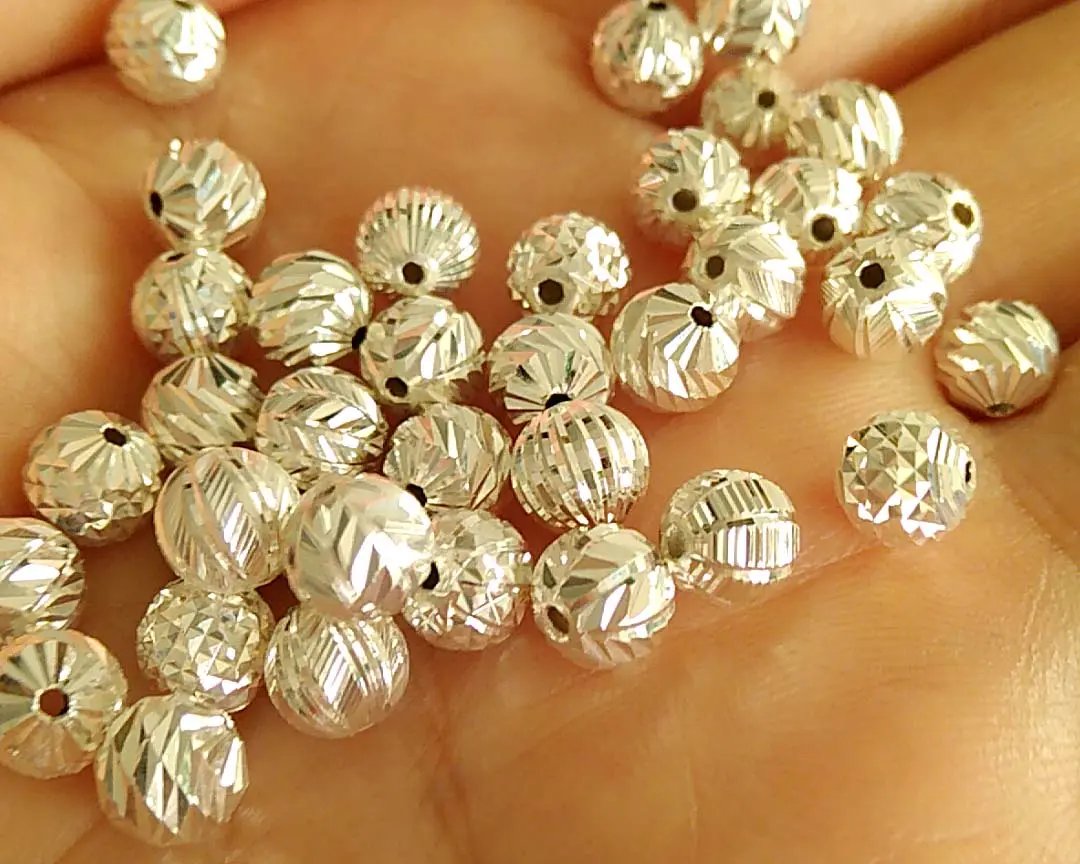
| Faceted round | Sphere with cut facets and decorative lines | High-end jewelry, light-catching pieces | Reflective and detailed |
| Abacus | Flat and wide with a wider center | Bracelets and fashion accessories | Structured and modern |
| Teardrop | Narrow top and rounded bottom | Earrings and pendants | Soft and tapered |
| Custom / engraved | Logo engravings, custom patterns | Branded jewelry, bespoke orders | Distinctive and unique |
On the cutting side, a CNC ball diamond cutting machine produces facets, decorative lines, custom designs and logo engravings on round and olive-shaped beads â all from saved programs, so repeat runs are identical. Different patterns can be switched instantly without changing tooling.
Hollow vs Solid: What the Size Really Costs
Hollow beads look full-size but use a fraction of the metal:
| Item | Solid Gold Bead (10mm) | Hollow Gold Bead (10mm, 0.2mm wall) |
| Weight | â 3.2 g | â 0.6 â 0.8 g |
| Metal consumption | High | Low (saves ~75-80%) |
| Finished weight | Heavy | Lightweight, comfortable |
| Material cost | Higher | Lower |
| Retail price | Higher | Similar appearance, lower cost |
| Profit per gram | Baseline | 2â3Ã higher |
This cost difference is why hollow production is the fastest-growing process in gold jewelry manufacturing â the size and shape look identical on the shelf, while the margin is in the wall thickness.
For manufacturers producing necklaces, bracelets, earrings, and anklets, hollow beads offer a practical way to meet customer demand for larger, eye-catching designs without the weight penalty or the material cost spike.
Key Factors When Choosing Bead Size and Equipment
Before selecting machines for your bead production line, consider these factors:
1. Confirm Your Target Bead Size Range
Start by defining the smallest and largest bead diameters in your product range. Some machines are designed for small beads (1.5â4mm), while others support larger sizes (8â14mm). If your factory regularly changes between several diameters, check whether the tooling can be replaced easily and whether the feeding mechanism can cover the complete size range.
2. Match the Machine to Your Material
Provide complete production information before selecting equipment, including:
Metal type and alloy (24K gold behaves differently from 14K gold; silver requires different pressure settings than gold)
Tube outside diameter and wall thickness
Required bead shape
Bead length and hole diameter
Expected daily output
Surface finishing method (polished, diamond-cut, textured)
A trial using your own metal tube is more useful than a general machine demonstration.
3. Evaluate Production Speed Realistically
Maximum machine speed is normally measured under ideal operating conditions. Actual output may be lower when producing large beads, difficult alloys, thin-walled tubes, or complicated shapes. Ask about stable production speed rather than focusing only on the maximum mechanical speed. Also consider the time required for loading, tooling adjustments, cleaning, inspection, and product changeovers.
4. Check Tooling Quality and Flexibility
The die directly affects the finished bead. Poor tooling may create scratches, uneven curves, offset openings, visible pressing marks, or inconsistent profiles. Check how the dies are manufactured, hardened, polished, installed, and replaced. Special bead shapes will normally require separately designed tooling.
SIBLE's hollow ball making machines feature an easy mold-change system with cross-specification mold compatibility â one operator can manage multiple machines with quick size swaps.
5. Consider Single-Head vs Dual-Head Cutting
For diamond cutting, a single-head machine covers standard faceting at lower cost. A dual-head machine adds pattern variety and roughly double the output per machine. If your product line stays within standard facets, single head is enough â upgrade only when your designs demand it. See our single vs dual head comparison for the full breakdown.
Matching Machines to Bead Sizes
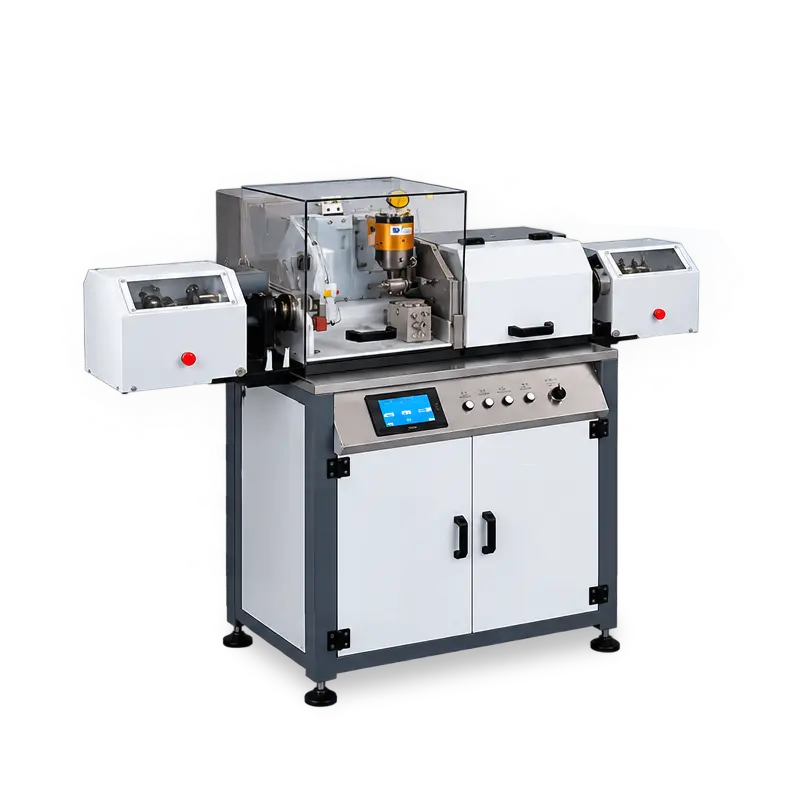
Hollow Ball Making Machine (forming)
Bead diameter: 1.5 â 14 mm (custom molds available)
Wall / sheet thickness: 0.15 â 0.45 mm
Speed: up to 120 pcs/min (~7,200 beads/hour)
Materials: gold (14K/18K/24K), silver, copper, brass, K-gold
Rotation: 180° / 360°
Power: 2.2 kW | Weight: 300 kg
Unique features: automatic pause time adjustment (by tube length), automatic power-off delay (reduces tube waste), easy mold change, cross-spec mold compatibility
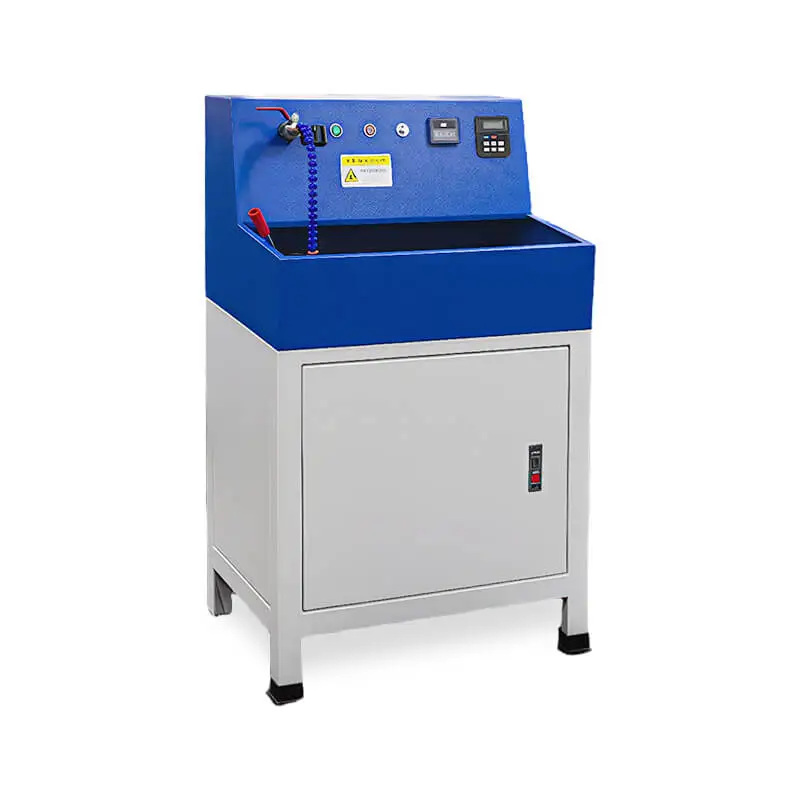
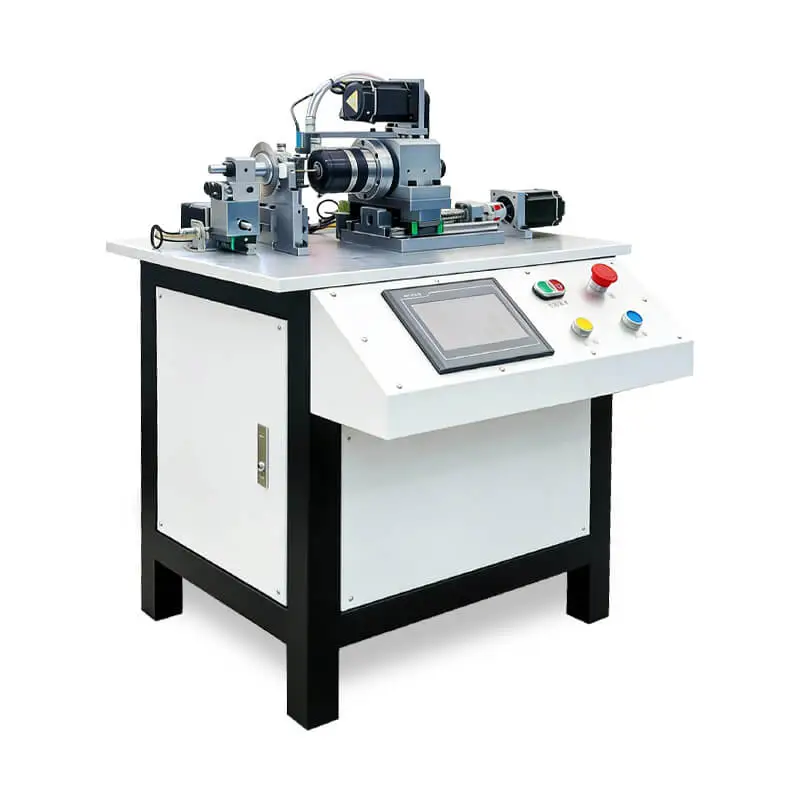
Ball Diamond Cutting Machine (faceting)
Bead diameter: Ã2.0 â Ã10.0 mm (round / olive-shaped)
CNC control: LCD touchscreen, programmable patterns
Spindle speed: 7,500 r/min
Working speed: 1 â 2 knife patterns per second
Fully automatic feeding; single-head and dual-head models
Common Problems and Practical Solutions
| Problem | Possible Cause | Practical Solution |
| Beads are not perfectly round | Die wear or misalignment, inconsistent tube hardness | Check die condition; confirm tube spec matches machine range |
| Wall thickness varies between beads | Feeding distance unstable, sheet thickness inconsistent | Calibrate feeding system; verify incoming sheet thickness |
| Bead surface has scratches or marks | Rough die surface, insufficient lubrication, metal dust in work area | Polish dies regularly; maintain clean work environment; adjust lubrication |
| Hole is off-center | Tube not centered in die, forming pressure uneven | Re-center tube; check die alignment; reduce forming pressure if uneven |
| Beads crack during forming | Tube too hard (insufficient annealing), forming pressure too high | Adjust annealing process; reduce forming pressure; test with sample batch first |
| Pattern depth inconsistent (cutting) | Bead not centered in fixture, cutting depth setting wrong | Readjust fixture and spindle; test on small batch before full production |
| Weak reflective effect after cutting | Cut is too shallow | Increase cutting depth slightly and test again |
| Bead deformation during cutting | Holding pressure too high | Reduce clamping force; check fixture size match |
Testing should begin with a small number of beads. Once the result is stable, the same settings can be used for batch production. Operators should record successful parameters for future reference.
Quick Selection Checklist
Beads 1.5 â 14 mm, hollow, round â hollow ball making machine
Beads 2 â 10 mm needing facets/lines/engraving â ball diamond cutting machine (single or dual head)
Standard round beads, no cutting â forming machine only
Branded or custom patterns â dual-head cutting machine
Need help choosing? Contact us for a free consultation â send us your target bead size, material, and expected daily output, and we'll recommend the right machine combination.
FAQ
What is the smallest hollow bead SIBLE can produce?
SIBLE hollow ball making machines can form beads from 1.5 mm diameter upward, with custom molds available for specific sizes outside the standard range.
What is the minimum wall thickness for hollow gold beads?
Around 0.15 mm for the smallest beads (1.5â2mm), up to 0.45 mm for large beads (8â14mm) â depending on bead diameter, metal type, and the gold alloy used.
Which bead shapes can a ball diamond cutting machine process?
Round and olive-shaped beads, with facets, decorative lines, custom designs and logo engravings programmed via CNC. Different patterns can be switched instantly without changing tooling.
Do I need a dual-head cutting machine?
Only if your product range needs dual-head patterns or double output. For standard single-head faceting, a single-head CNC machine is the cost-effective choice.
How do I know which machine combination fits my factory?
Send us your target bead size range, material type, expected daily output, and preferred finishing (polished, diamond-cut, or both). We'll recommend the right machine combination and arrange a sample production test.


Message Online


