
 Tiếng Việt

Dragon Boat Festival Customer Visit to Greater Bay Area Gold Wire Factory | Jewelry Manufacturing Insights
The Dragon Boat Festival is not only a traditional Chinese celebration but also an opportunity to show international customers exactly how a modern gold wire factory operates. During this year's festival, Sible Jewelry Machinery welcomed overseas customers to visit a leading gold wire manufacturing facility in China's Greater Bay Area.
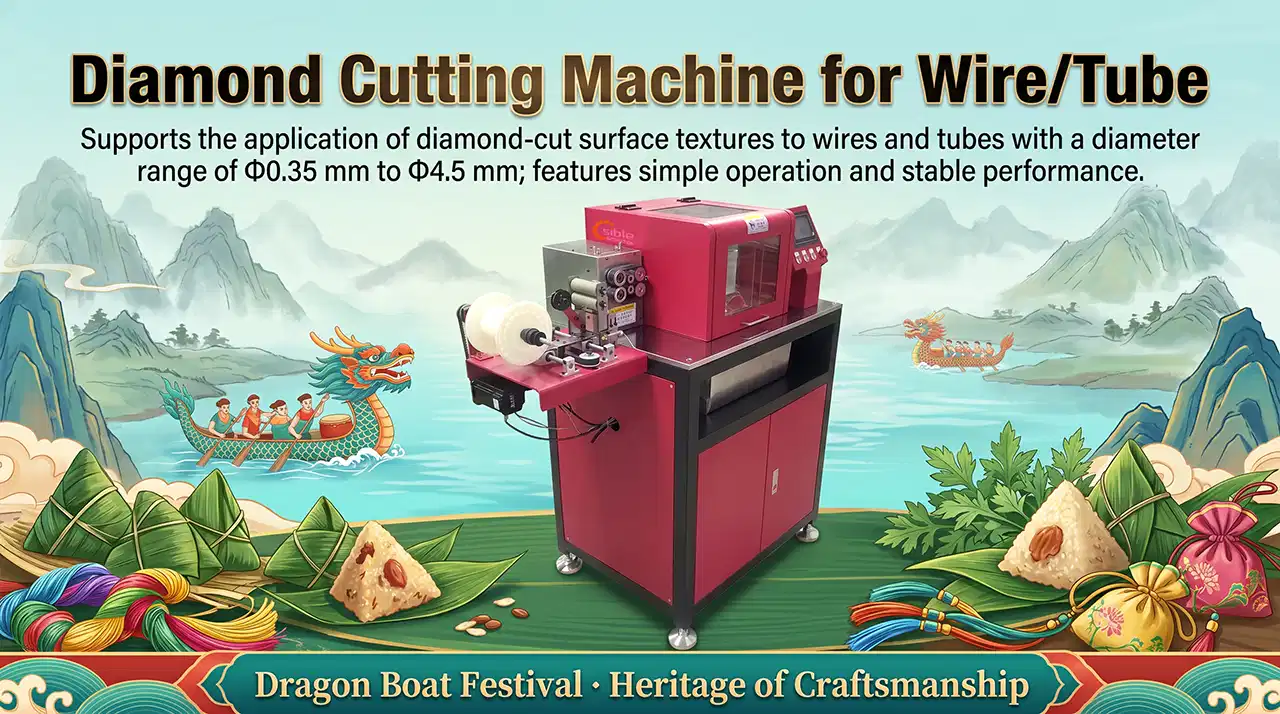
This article shares what we saw, what the factory manager told us, and what international customers can learn from visiting a real production floor.
Inside a Real Gold Wire Factory: What We Saw
Walking into the factory, the first thing we noticed was the clean, organized layout. Every workstation had a clear purpose, and the workflow followed a logical line from raw material entry to finished product exit.
Factory Layout and Workflow
Receiving area: Raw gold wire inspected for purity and diameter consistency before entering production
Straightening section: Wires passed through straightening rollers to remove bends accumulated during transport
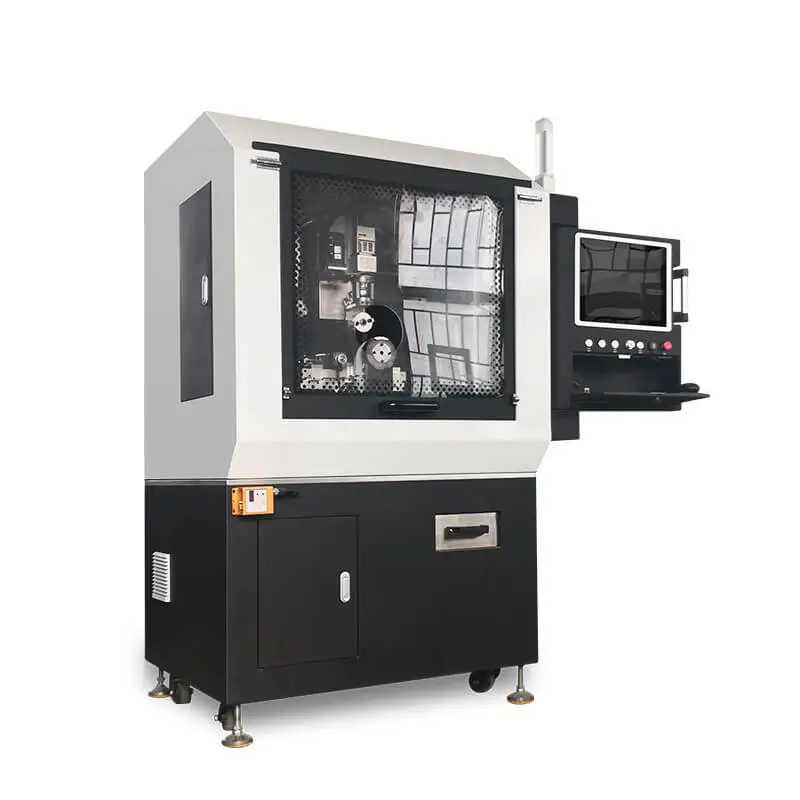
Diamond cutting room: The core production area, where Sible diamond cutting machines ran continuously, creating reflective facets on gold wire
Quality control station: Every batch checked for surface finish, pattern consistency, and dimensional accuracy
Packaging area: Finished products coiled and packed for shipment
Machine Placement and Operator Stations
The machines were arranged in a U-shaped layout, allowing one operator to monitor two machines simultaneously. Each station had a small table for the operator's tools and a digital display showing real-time production data.
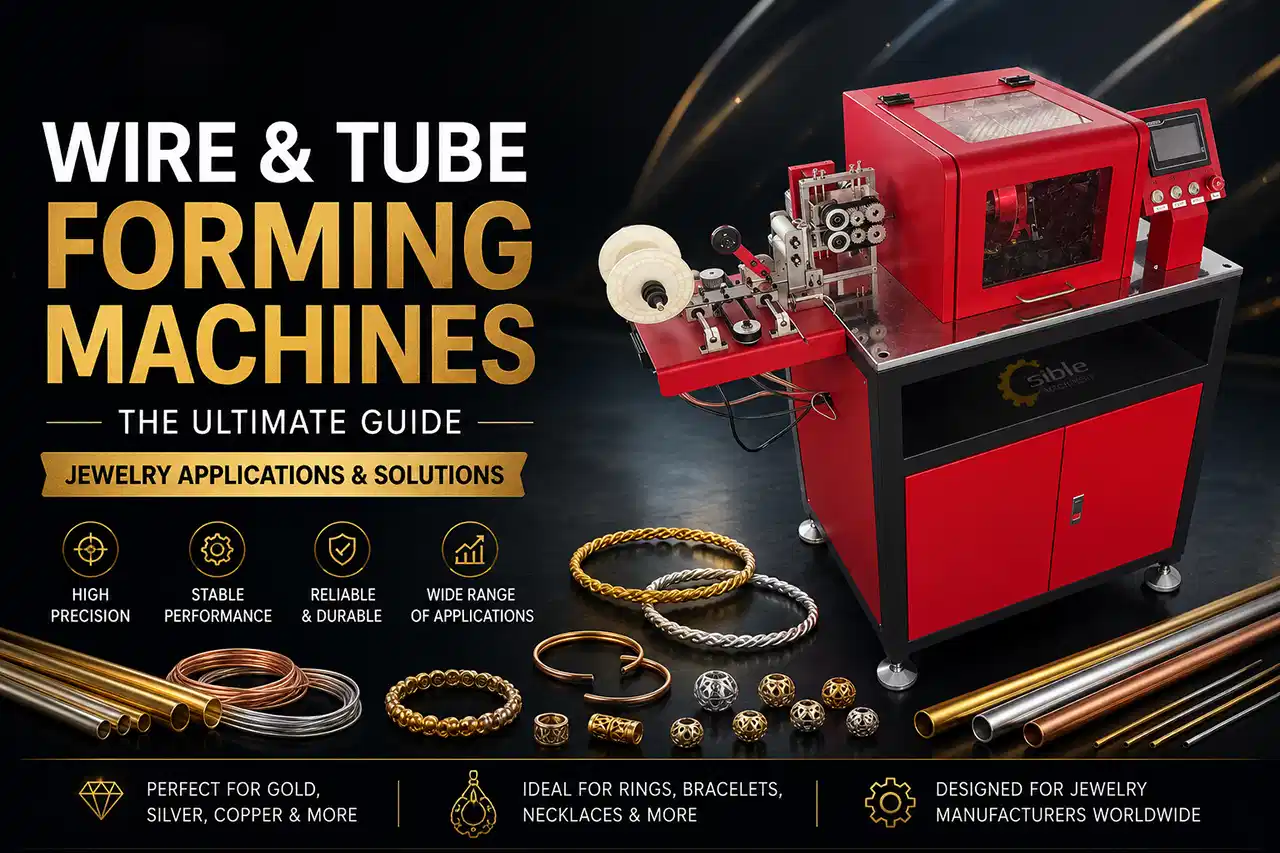
We counted four diamond cutting machines, two bead making machines, and one wire forming machine in the main production hall — all running during our visit.
Factory Manager's Answers to Visitor Questions
The most valuable part of the visit was the open Q&A session. Here are the questions our international customers asked and the factory manager's honest answers:
Q: "How many operators do you have per shift?"
A: "Two operators manage three cutting machines and one wire forming machine. After the first week of training, new operators can run independently. The automatic feeding system means one person can start a machine, check it every 30 minutes, and handle quality control between checks."
Q: "What's your biggest bottleneck in production?"
A: "Mold changes between different wire sizes still require 15-20 minutes. We are working on standardizing to fewer wire diameters to reduce changeover time. If we could reduce changeovers to under 10 minutes, our daily output would increase by about 15%."
Q: "What would you buy again if starting over?"
A: "We would invest in spare molds for our most popular sizes upfront. Waiting 10 days for a mold delivery is the only thing that stops production. We also wish we had bought the automatic collection system from day one instead of adding it six months later."
Q: "How do you maintain consistent quality?"
A: "We run a 30-second test cut at the start of each shift. If the test piece passes inspection, we start full production. The operator checks samples every hour. The machine's automatic alarm catches most issues before they affect production."
The Production Floor: A Photo Tour
During the tour, customers took photos at each station. Here is what they captured and the key observations from each stop:
Stop 1: Raw Material Receiving
Gold wire arrives in coils weighing 5-10 kg each. The factory stores wire by purity and diameter in labeled racks. Before production, each coil is tested with a handheld spectrometer to confirm metal composition.
Stop 2: Diamond Cutting in Action
The Sible diamond cutting machine was processing 18K gold wire at 1.2mm diameter. The operator showed how the CNC control panel displays spindle speed, feed rate, and production count in real time. The surface finish coming off the machine was visibly brighter than manually polished samples placed next to it for comparison.
Stop 3: Quality Control Checkpoint
The QC station had a microscope, calipers, and sample cards showing acceptable vs. rejected finish quality. The inspector demonstrated how a small variation in cutting depth creates noticeable differences in the final product's sparkle.
Stop 4: Automatic Collection System
The finished wire coiled automatically into containers at the end of the production line. The factory manager explained that this system reduced handling damage by 80% compared to their previous manual coiling method.
Why Factory Visits Matter More Than Brochures
Many customers told us they had researched jewelry machinery online for months before this visit. Seeing the machines in person changed their perspective in three important ways:
Noise and vibration: Online videos make machines sound similar. In person, the difference in noise levels between high-quality machines and cheap alternatives is immediately obvious.
Real production speed: Brochures claim speeds, but watching a machine process 3 kg of gold wire in 15 minutes gives a visceral understanding of what "continuous production" actually means.
Operator skill level: Seeing that a worker with only one week of training could handle three machines confidently reassured customers that automation truly reduces labor dependency.
Key Takeaways for International Buyers
If you are considering a factory visit or purchasing jewelry machinery from China, here are the lessons from this Dragon Boat Festival tour:
Arrive with a checklist: Know what you want to see and prepare questions in advance. The factory manager appreciated specific questions about mold compatibility and consumable costs.
Talk to operators, not just managers: Operators use the machines every day. They know which features matter and which are marketing hype.
Bring your own wire sample: Some customers brought their own gold wire to test on the machine. This gave them confidence that the machine could handle their specific material.
Plan for a follow-up remote session: After seeing the physical machine, schedule a video call with the supplier to revisit specifications with your new understanding.
Frequently Asked Questions
Q: How long does a factory tour usually take?
A full factory visit including production floor tour, machine demonstrations, and Q&A session typically takes 3-4 hours. This allows enough time to see everything without rushing.
Q: Can I test my own materials on the machines during a visit?
Yes. It is common for customers to bring gold wire, silver wire, or bead samples for a live test. This is the most reliable way to evaluate machine performance for your specific production needs.
Q: What should I look for during a factory tour?
Focus on machine stability (watch it run for 30 minutes), operator skill level (how long did training take), maintenance practices (how clean is the floor), and the supplier's inventory of spare parts.
Q: Is it worth traveling to China just for a factory visit?
For serious buyers planning investments over $10,000, a factory visit is highly recommended. The insights gained and the relationship built with the supplier often lead to better equipment selection, faster shipping, and more favorable terms.
→ Read how a Malaysian manufacturer [achieved similar results]
→ For factory managers planning their next purchase, see our [complete selection guide]
Related Resources


Message Online


