
 Tiếng Việt

Flower Wire Shaping Machine: Decorative Jewelry Production Guide
Flower wire patterns — auspicious clouds, tight spirals, four-corner arcs — have been a signature of fine jewelry for decades. In the past, producing these decorative components meant skilled hands bending wire one piece at a time, with every piece slightly different from the last. Today, jewelry factories use a flower wire shaping machine to form the same patterns from gold, silver, copper and K-gold wire with repeatable precision and at a fraction of the manual cost.
This guide explains what a flower wire shaping machine does, which patterns it can create, how to choose one for your workshop, and the common problems manufacturers run into — with practical solutions.
What Is a Flower Wire Shaping Machine?
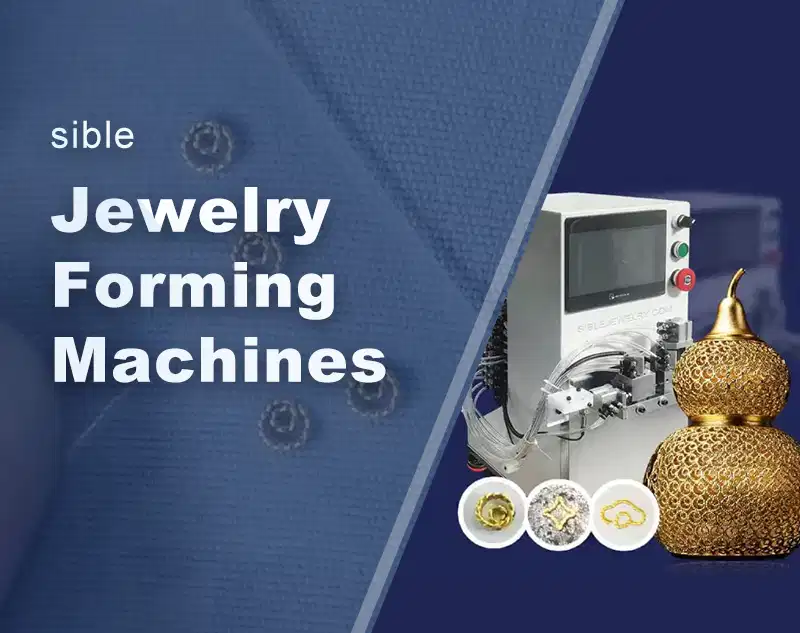
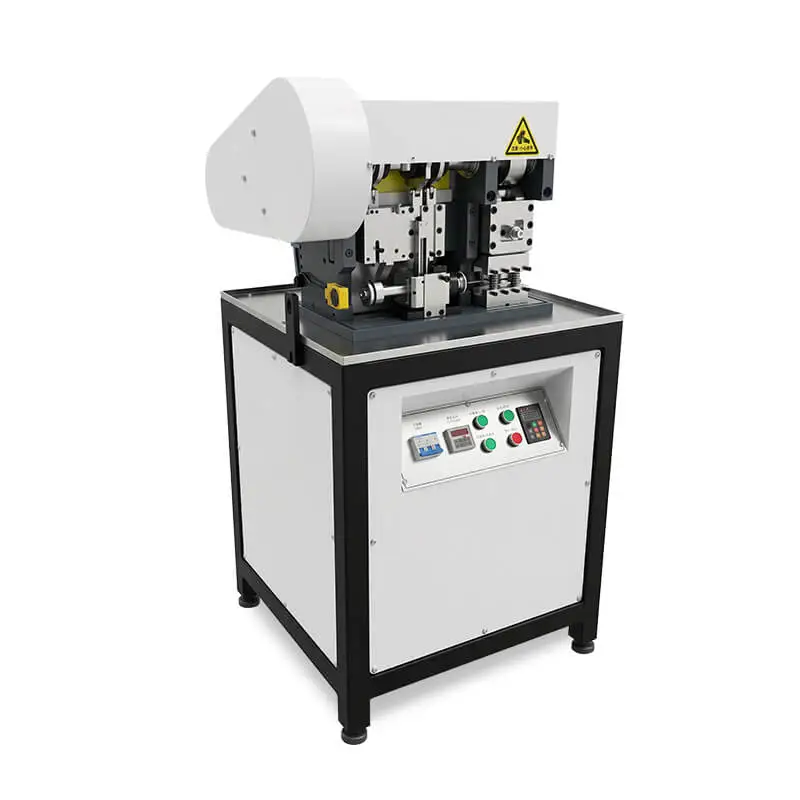
A flower wire shaping machine is a compact wire-forming workstation that feeds precious metal wire through adjustable forming dies and guides to produce decorative shapes such as spirals, arcs, clouds and geometric line patterns. Instead of hand-bending each component, the operator sets the forming parameters once, and the machine reproduces the same shape consistently across long production runs.
The Sible flower line shaping machine, for example, supports gold, silver, copper and K-gold wire, handles wire diameters from 0.3 mm to 3.0 mm (adjustable), and offers five or more decorative pattern styles including cloud, spiral, arc and custom designs. Its compact footprint — roughly 500 mm × 300 mm × 600 mm with a 0.5 KW drive — lets it fit into small workshops as easily as into large production lines.
Typical finished components: ring shanks with decorative wire, earring frames, pendant surrounds, bracelet charms, and custom jewelry wire details.
Why Decorative Wire Forming Is Popular in Jewelry Manufacturing
1. Design flexibility without new casting molds
With cast components, every new design means a new mold and a waiting period. Wire-formed decoration is mold-free: switching from a spiral to a cloud pattern is a parameter adjustment, not a tooling project.
2. Consistent output that manual work cannot match
| Dimension | Hand bending | Flower wire shaping machine |
|---|---|---|
| Output consistency | Depends on operator skill | High repeatability |
| Production speed | Slow, one piece at a time | Continuous automatic feeding |
| Labor cost per piece | High | Low |
| Training time | Months of practice | Short setup training |
| Pattern switching | Re-learn each style | Adjust parameters |
3. Lightweight, hollow-friendly jewelry components
Wire-formed decoration adds visual richness without heavy metal mass, which suits lightweight and hollow jewelry lines that keep material costs under control.
How Does a Flower Wire Shaping Machine Work?
The working principle is a controlled forming sequence repeated continuously:
Step 1 – Wire feeding. The machine pulls wire from the spool through a straightening and tension-control section, so the incoming material is smooth and free of kinks.
Step 2 – Pattern forming. The wire passes through adjustable forming dies, rollers or guides that bend it into the selected shape. Because the forming geometry is fixed by the tooling and settings, every component matches the previous one.
Step 3 – Output and cutting. The formed wire is advanced at a set rate and separated into individual components, ready for assembly into rings, earrings, pendants or charms.
| Production stage | Main equipment | Key control point |
| Wire preparation | Rolling mill / wire drawing equipment | Consistent diameter and clean surface |
| Wire feeding | Straightener + tension control | No kinks, steady tension |
| Pattern forming | Flower wire shaping machine | Die alignment, speed 30–40 strokes/s |
| Component separation | Cutting unit on the machine | Uniform length per piece |
| Assembly | Manual or semi-automatic linking | Consistent orientation |
The working speed is adjustable, and the Sible machine typically runs at 30–40 forming strokes per second, which is why a single workstation can feed a whole assembly bench.
Which Patterns Can a Flower Wire Shaping Machine Create?
| Pattern type | Visual character | Typical application |
| Auspicious cloud patterns | Rounded, flowing curves | Pendant and earring components |
| Spiral and helix shapes | Tight, even coils | Rings, bracelets, charms |
| Four-corner arc designs | Symmetrical frame lines | Decorative wire frames |
| Geometric line patterns | Clean, regular shapes | Mass-produced chain details |
| Custom wire shapes | Programmable to your design | Bespoke jewelry production |
Manufacturers combine these patterns with plain wire, diamond-cut beads or hollow beads to build finished jewelry components in one continuous workflow.
Which Materials Can It Process?
The machine works with gold, silver, copper and K-gold wire:
| Material | Typical use | Forming behavior |
| Gold (9K–24K) | Fine jewelry | Soft, easy to shape |
| Silver | Daily-wear jewelry | Work-hardens; anneal between stages if needed |
| K-gold | Rings, bracelets | Stronger; adjust speed for harder alloys |
| Copper | Practice and costume pieces | Economical material for operator training |
Wire diameter range matters: confirm the machine covers the gauges you actually use before purchasing. The Sible flower line shaping machine covers 0.3 mm to 3.0 mm, which spans fine chain work to heavier bangle components.
Key Factors When Choosing a Wire Forming Machine
Wire diameter range. Match the machine to your thinnest and thickest wire. A wider range means more product flexibility.
Pattern capability. If your catalog is built around cloud motifs, make sure the tooling set includes that style; if you design custom pieces, choose a machine with adjustable/customizable forming geometry.
Speed and feeding. Automatic wire feeding with tension control keeps output uniform and reduces operator fatigue.
Material compatibility. Confirm the machine handles gold, silver, copper and K-gold without excessive wear or contamination.
Footprint and power. A compact unit (around 500 × 300 × 600 mm, 0.5 KW) suits small workshops; check your bench space and 220 V supply.
Manufacturer support. Factory-direct suppliers with remote video guidance, documentation and spare-parts support shorten your learning curve.
Common Problems and Practical Solutions
| Problem | Possible cause | Solution |
| Inconsistent pattern shape | Die wear or loose alignment | Check dies; realign per the manual |
| Wire kinks or jams | Poor feeding tension | Clean and adjust the straightener/tension unit |
| Surface scratches on wire | Dirty guides or burrs | Polish guides; replace worn parts |
| Pattern drift over a long run | Speed too high for the alloy | Reduce speed; verify material is uniform |
| Output length varies | Cutting unit timing off | Recalibrate the cutting interval |
Flower Wire Shaping Machine in the Wider Production Line
A flower wire shaping machine is rarely the only machine in a jewelry workshop. In a typical Sible-equipped production line it works alongside:
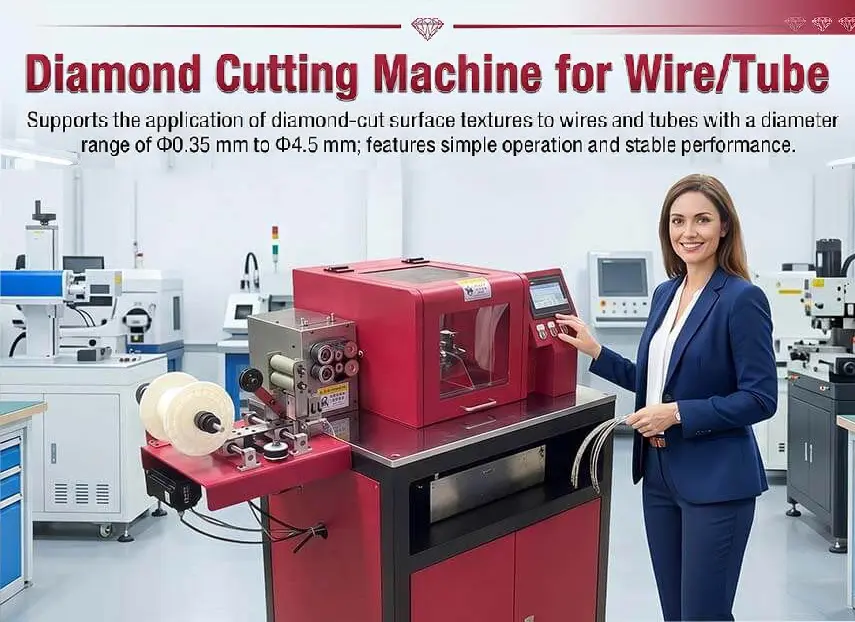
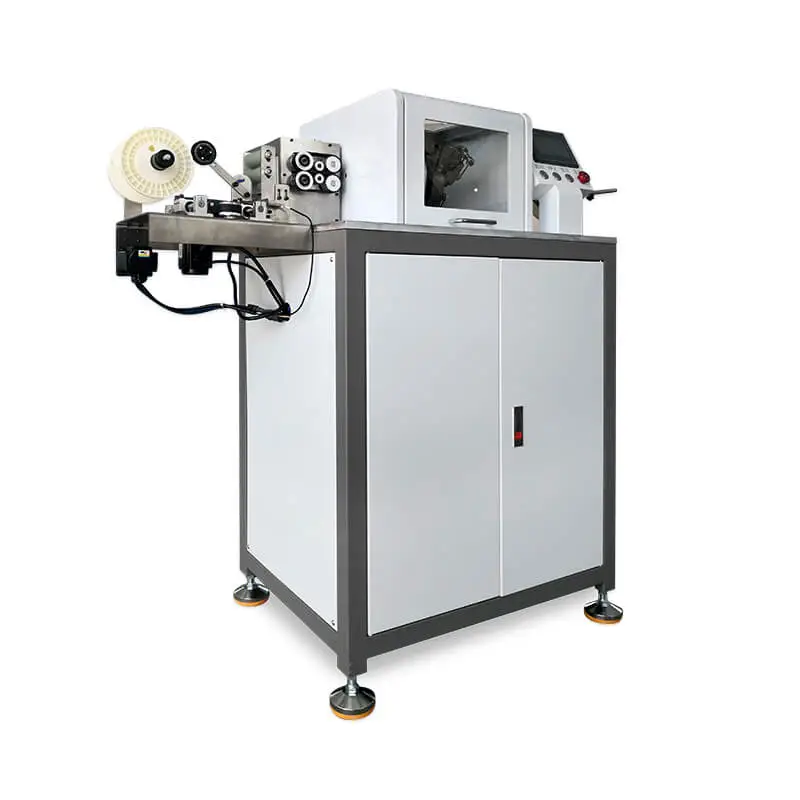
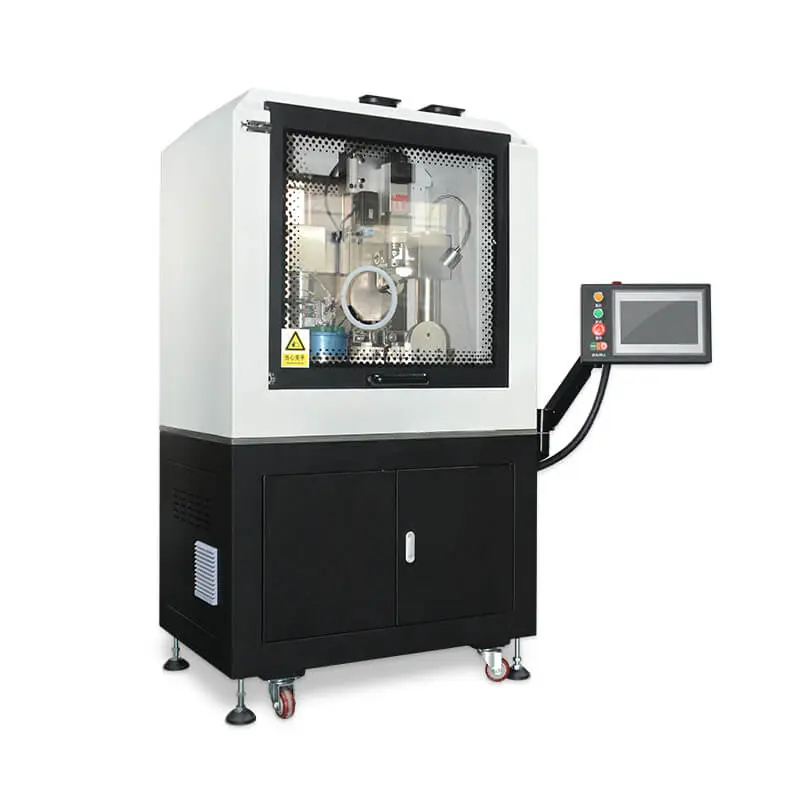
A diamond cutting machine for wire and tube to prepare precise wire and tube blanks
A ball making machine for bead components used with decorative wire
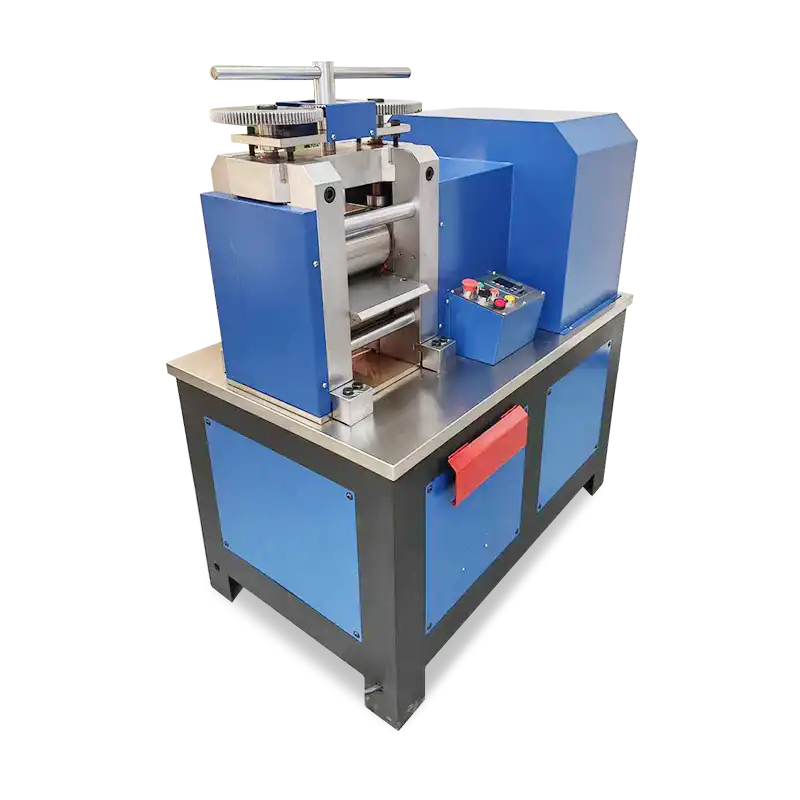
A jewelry rolling mill when you draw your own strip and wire from ingot
For more context on how beads and decorative wire come together, read our guide to ball bead sizes and shapes.
FAQ
What is a flower wire shaping machine used for?
It is used to bend gold, silver, copper or K-gold wire into decorative shapes — clouds, spirals, arcs and custom patterns — for rings, earrings, pendants, bracelets and charms.
What wire diameter can a flower wire shaping machine handle?
Typical machines cover adjustable ranges such as 0.3 mm to 3.0 mm. Confirm the range matches the wire gauges you use before buying.
Can one machine produce multiple patterns?
Yes. Most machines support several pattern styles, and switching between them is done by adjusting forming parameters or changing tooling rather than replacing the whole machine.
Is a flower wire shaping machine suitable for a small workshop?
Yes. Compact models occupy roughly the space of a desktop unit (around 500 mm × 300 mm × 600 mm) and run on standard 220 V supply, which fits small workshops.
Does Sible provide support after purchase?
Sible provides technical documentation, remote video guidance for setup and operation, and spare-parts support. Extended warranty and on-site installation can be arranged for larger orders.
Ready to Add Decorative Wire Forming to Your Production?
Whether you are a small workshop adding one forming workstation or a factory standardizing an entire decorative-wire line, the right machine setup depends on your wire diameters, target patterns and daily output. Send us your samples or drawings and we will recommend a suitable configuration.
Contact Sible Jewelry Machinery for a factory-direct quotation and technical guidance.

Message Online


