
 Tiếng Việt

Pipe Diamond Cutting Machine for Jewelry Tubes: How to Choose Between Models and Applications
Pipe Diamond Cutting Machine for Jewelry Tubes: How to Choose Between Models and Applications
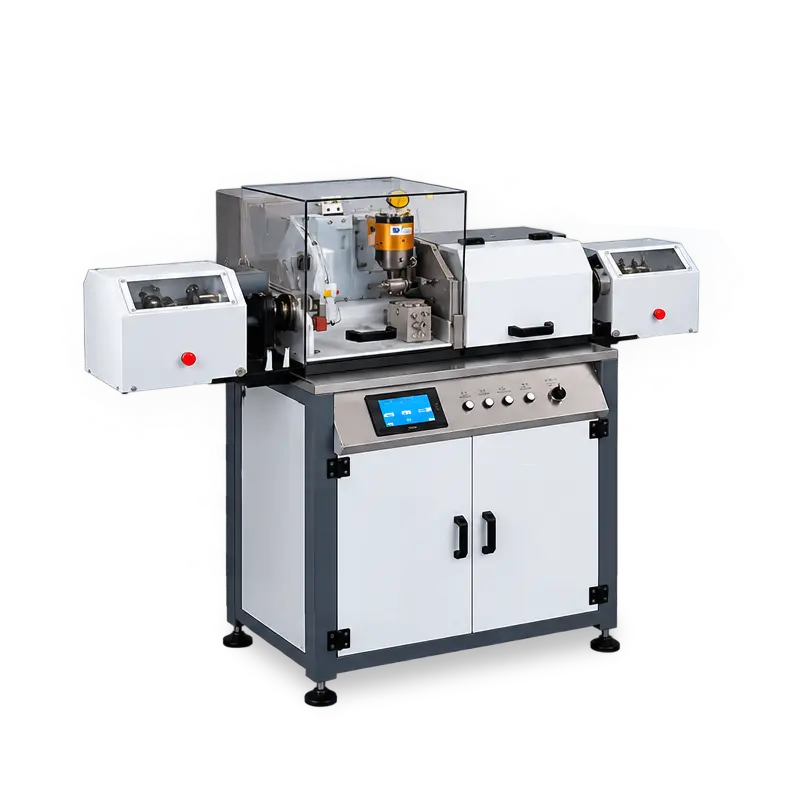
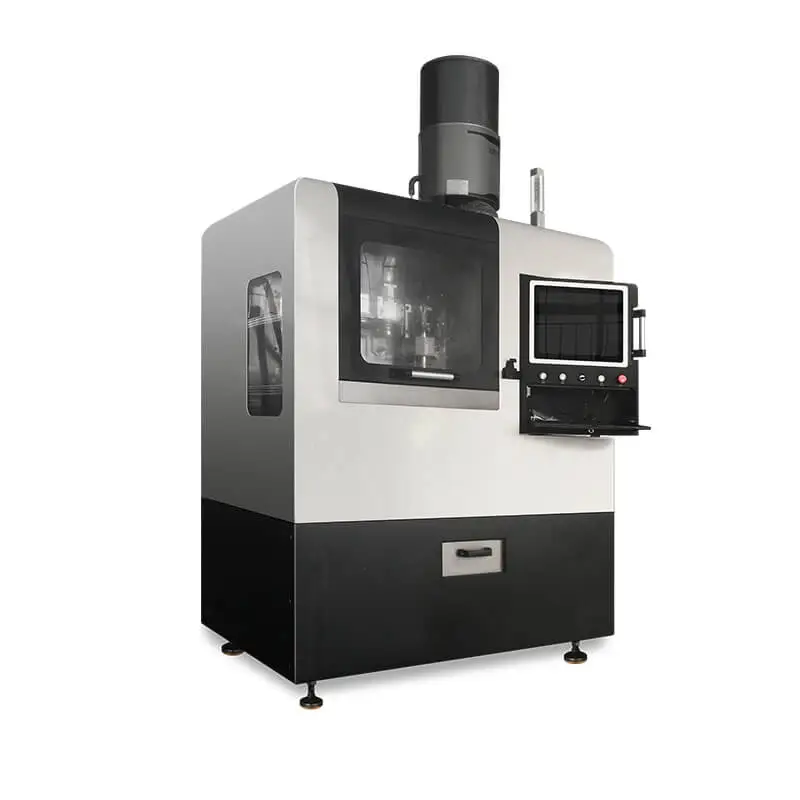
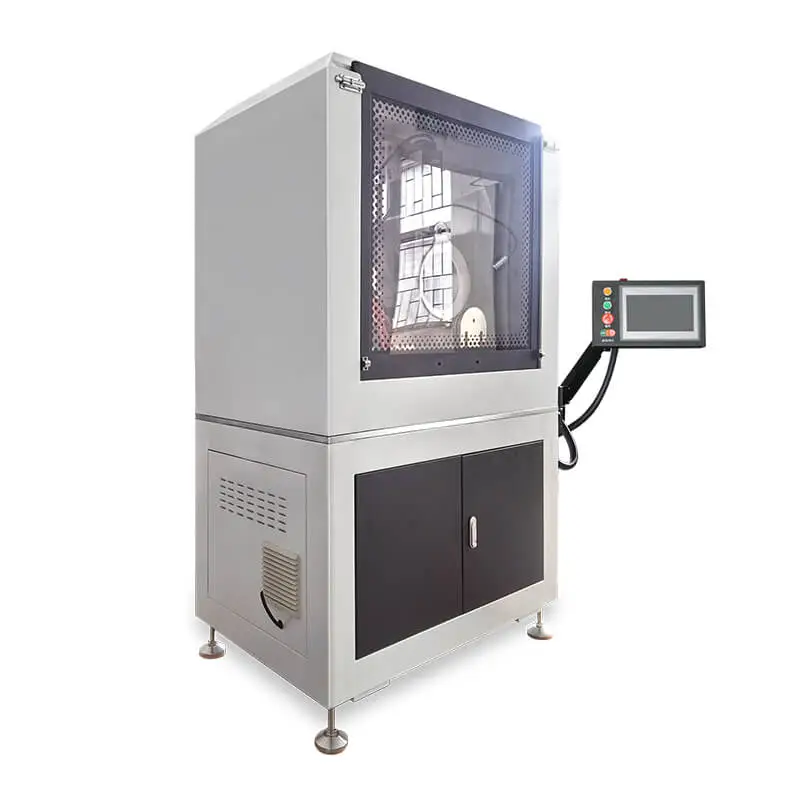
Pipe diamond cutting machines are specialized equipment for processing metal tubes used in bangles, rings, chain components, and hollow jewelry constructions. Unlike wire cutting machines that handle solid profiles, pipe cutting machines must account for the hollow cross-section — requiring different cutting dynamics, clamping methods, and tool geometries. This article compares available models, explains key selection criteria, and provides practical application guidance.
1. Pipe Diamond Cutting vs. Wire Diamond Cutting: Key Differences
Many buyers ask whether a wire cutting machine can handle tube cutting. The answer is no — there are fundamental differences in how these two machine types operate:
| Characteristic | Wire Cutting Machine | Pipe Cutting Machine |
|---|---|---|
| Input Material | Solid wire (round cross-section) | Hollow tube (cylindrical) |
| Diameter Range | 0.35 mm – 4.5 mm | 2.0 mm – 8.0 mm |
| Clamping Method | External grip on solid surface | Internal or external grip (wall thickness dependent) |
| Cutting Force | Lower — solid material resists deformation | Higher — thin wall requires controlled pressure |
| Tool Exit Control | Standard — material supports exit edge | Critical — thin wall prone to burr formation |
| Typical Products | Cut wire for beads, chain links | Bangle sections, ring blanks, tube components |
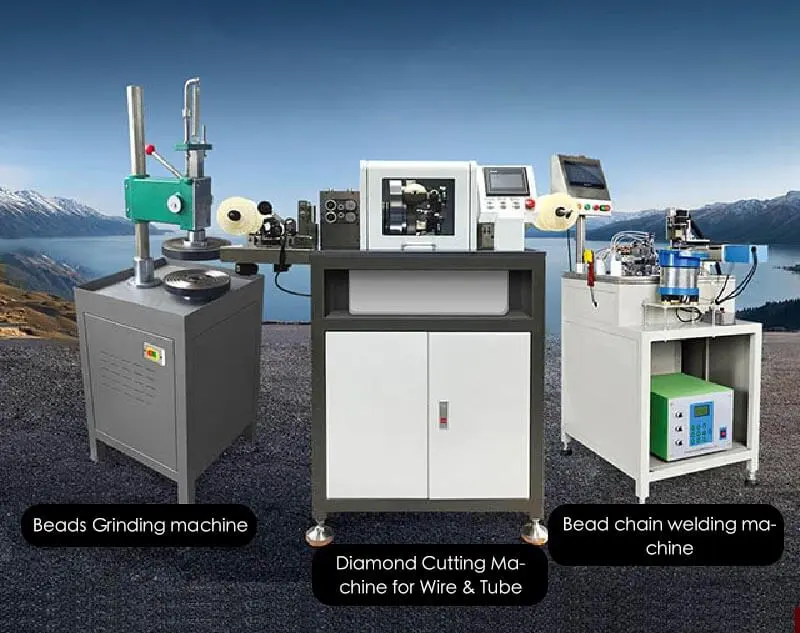
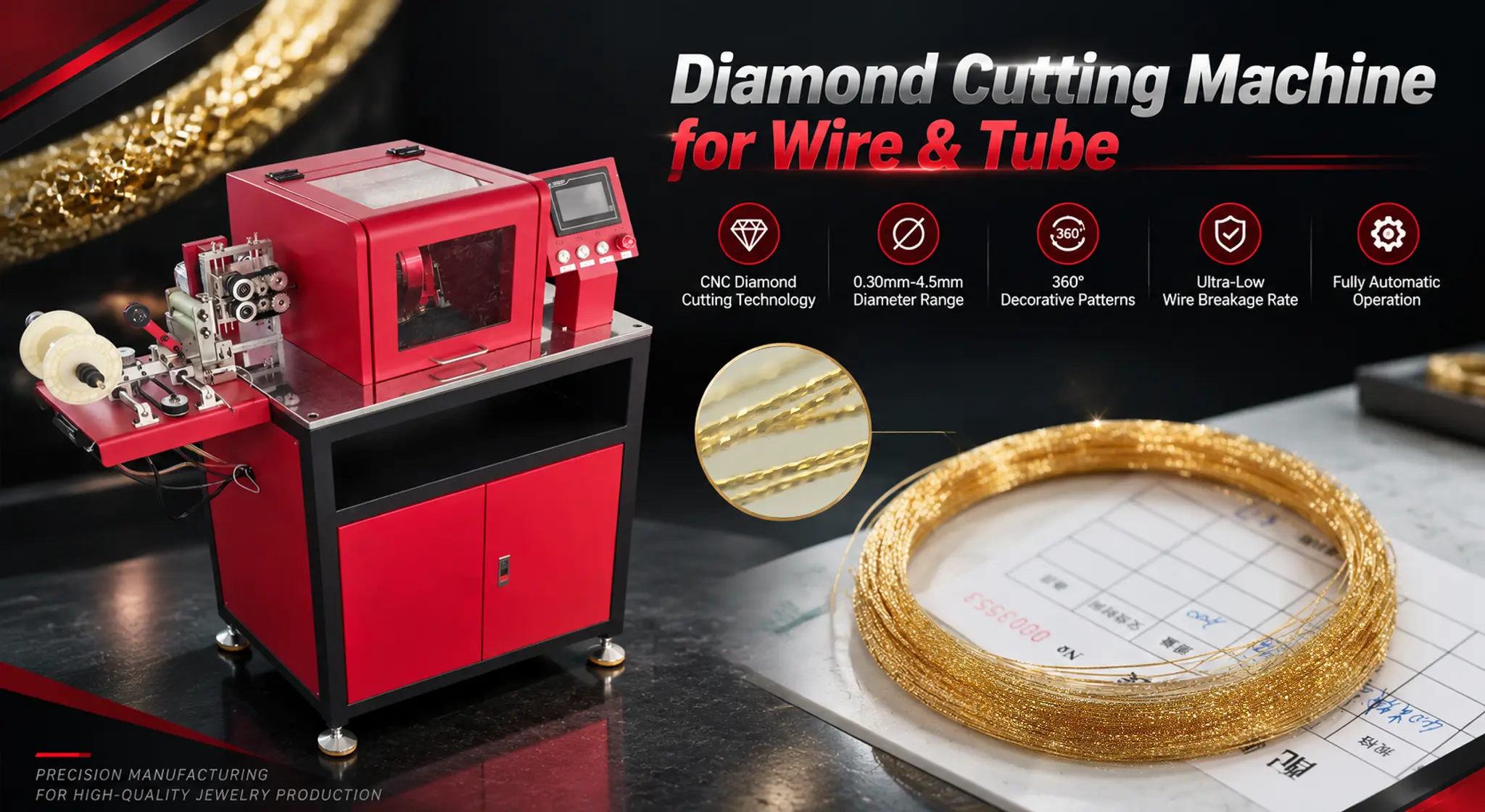
If your production involves both wire and tube, you generally need two different machines. Sible offers dedicated wire and tube diamond cutting machines optimized for each material type.
2. Machine Model Comparison
Available Configurations
Pipe diamond cutting machines typically come in two configurations:
Single-Station Models
Best for: Small workshops, low to medium volume
Processing: One tube at a time with manual or semi-automatic loading
Typical output: 500–1,500 pieces per shift
Advantages: Lower cost, smaller footprint, easier to learn
Multi-Station / Automatic Models
Best for: Medium to large factories, high-volume production
Processing: Continuous automatic feeding with multi-axis cutting
Typical output: 3,000–8,000+ pieces per shift
Advantages: Higher throughput, lower per-piece cost, consistent quality
Cutting Head Options
| Cutting Head Type | Best For | Pattern Examples |
|---|---|---|
| Single straight blade | Simple circumferential cuts | Plain tube sections |
| Curved/contour blade | Decorative edge profiles | Pineapple cut, scalloped edges |
| Four-axis CNC head | Complex decorative patterns | Floral motifs, geometric patterns |
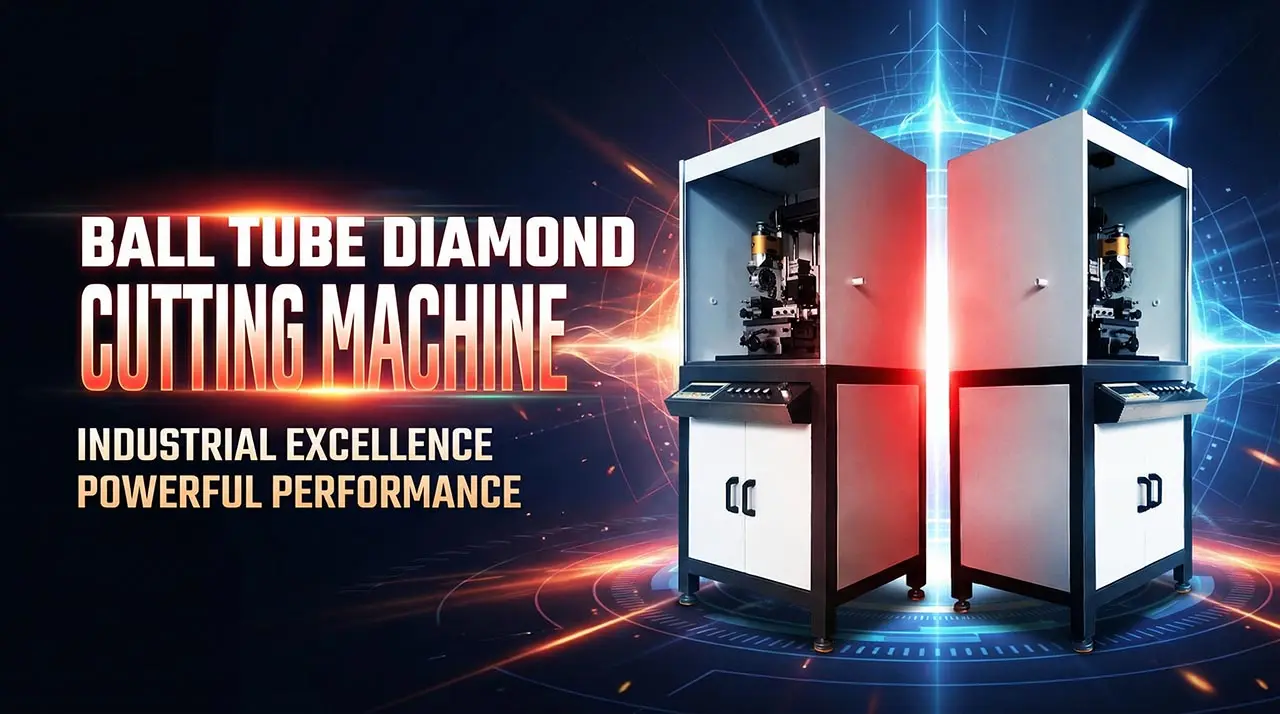
Sible's pipe diamond cutting machine supports all three head types with quick-change tooling — allowing one machine to produce a wide variety of tube products.
3. Applications: What Can You Make with a Pipe Cutting Machine?
Bangle and Bracelet Sections
The most common application. Pipe cutting machines cut tube stock into consistent-width bangle sections. After cutting, these sections go through forming to create the final bangle shape, then polishing for surface finish. Machines with decorative blade options can add patterns directly during the cutting step.
Ring Blanks
Tube sections cut to ring width are used as ring blanks. The diamond cutting process produces clean, square edges that minimize post-processing. For rings requiring decorative surfaces, the pipe cutting machine can engrave patterns on the outer surface before the ring is sized and finished.
Chain Components for Hollow Chains
Hollow chain manufacturing requires precisely cut tube sections that will form individual chain links. Consistent cut length and clean edges are critical — any variation affects the soldering step and final chain appearance.
Decorative Tube Components
Using curved or four-axis blades, pipe cutting machines create decorative tube elements for earrings, pendants, and necklace components. The ability to store digital patterns means the same design can be reproduced months later with identical quality.
4. Selection Criteria: Which Machine Is Right for You?
Consider Your Production Volume
Under 500 pieces/day: A single-station manual model is cost-effective
500–3,000 pieces/day: Semi-automatic model with auto feeding
Over 3,000 pieces/day: Full automatic multi-station machine
Consider Your Product Mix
Few product types, high volume: Choose a dedicated machine with optimized tooling for your specific pattern
Many product types, low volume each: Choose a flexible machine with quick-change tooling and pattern memory
Consider Your Material
Gold tubes: Standard diamond tools work well. Lower clamping pressure needed to avoid wall deformation
Silver tubes: Good cutting behavior. Standard parameters apply
Copper/Brass tubes: Harder material — use carbide or diamond-coated tools for longer life
Budget and ROI
Based on real customer feedback, a pipe diamond cutting machine typically pays for itself within 3–6 months for a busy workshop through labor savings and reduced material waste. The fully enclosed design of modern machines also reduces precious metal dust loss — an often-overlooked cost saving that can add up to significant amounts over a year.
5. Maintenance Tips for Pipe Cutting Machines
Pipe cutting machines require specific maintenance because of the unique challenges of hollow tube processing:
Clamping System Care
Tube clamping jaws experience more wear than wire clamps because the cutting force is applied near the edge of the tube wall. Inspect jaws weekly and replace at the first sign of wear — worn jaws cause oval cuts and inconsistent length.
Debris Management
Pipe cutting generates fine metal shavings that can accumulate inside the machine. Sible machines feature a fully enclosed design with an efficient material recovery system, but periodic internal cleaning (weekly) is still recommended to prevent debris from interfering with moving parts.
Tool Rotation
Rotate diamond tools between cutting edges to maximize tool life. Mark each tool with installation date and track cuts per tool. For high-volume production, schedule tool replacement during planned downtime rather than waiting for failure.
Calibration Check
Run a calibration check at the start of each production day using a reference tube of known dimensions. This catches any drift in cutting depth or length settings before they produce a batch of rejects.
Frequently Asked Questions
Can a pipe cutting machine process square or shaped tubes?
Most pipe diamond cutting machines are designed for round tubes. Square or shaped tubes require specialized clamping and feeding systems. Contact Sible for custom solutions if your production involves non-round profiles.
What is the minimum wall thickness the machine can handle?
For gold and silver tubes, wall thickness as low as 0.2 mm can be cut with proper clamping and reduced cutting pressure. Thinner walls require slower feed rates and sharper tools. For copper and brass, minimum wall thickness is typically 0.3 mm.
How do I prevent burr formation on cut edges?
Burr formation is minimized by: (1) using sharp diamond tools, (2) setting the correct cutting depth (not too deep per pass), (3) ensuring proper tube clamping to eliminate vibration, and (4) using the tool exit angle parameter on CNC models. Light deburring can be done with a second-pass tool if needed.
Is training included with the machine purchase?
Yes. Sible provides online training and documentation with every machine. See our beginner's guide for an overview of what to expect. On-site installation and training are also available for larger orders.
What is the power requirement for a pipe cutting machine?
Standard pipe diamond cutting machines operate on single-phase 220V power, making them suitable for most jewelry workshops. Three-phase options are available for higher-power models. Consult Sible's technical team for specific power requirements.
Related Resources

Message Online


