
 Tiếng Việt

Wire Forming vs Tube Forming: Which Process for Your Product
Wire and tube forming are two of the most important processes in jewelry manufacturing. Both shape metal into precise cross-sections and components, but they serve different products, use different techniques, and demand different machines. Choose wrong and you either overspend on capability you do not need, or bottleneck production with equipment that cannot make your product.
This guide compares wire forming and tube forming — the techniques behind each, the products they make, and a practical selection framework for jewelry factories.
What Is the Difference?
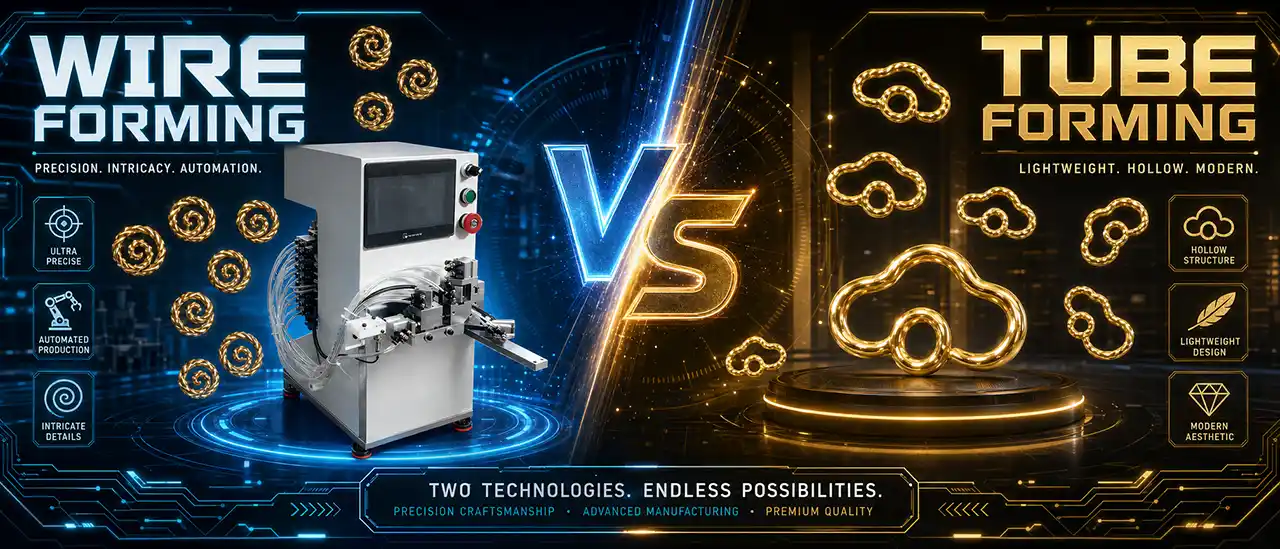
Wire forming shapes solid wire into decorative patterns and components — spirals, arcs, cloud shapes, flower lines, bracelet blanks, and custom findings. The material stays solid throughout.
Tube forming shapes hollow tube stock into components — bracelet and bangle bodies, ring shanks, earring parts, and other pieces where a hollow cross-section saves weight and precious metal.
The core question is simple: is your product solid or hollow?
| Wire Forming | Tube Forming | |
|---|---|---|
| Input material | Solid wire | Hollow tube |
| Typical products | Flower-line wire, spirals, decorative patterns, custom findings | Bracelets, bangles, ring shanks, earring components |
| Material usage | Full cross-section | Hollow — less metal per piece |
| Best for | Decorative wirework, chain feedstock, custom shapes | Hollow bangles and rings, lighter pieces, higher perceived value per gram |
Key Techniques in Wire Forming
Rolling
Rolling passes metal through successive roller sets, each gradually shaping the material until the final cross-section is reached. Ideal for long, uniform runs with consistent cross-sections.
Best for: high-volume production of standard cross-sections.
Drawing
Drawing reduces wire diameter by pulling through progressively smaller dies. The technique achieves tight tolerances and smooth surfaces.
Best for: precision wire with exact size requirements.
Bending and Shaping
Dedicated bending machines create curves, angles, and specific shapes from straight wire. Programmable forming parameters handle a wide range of wire sizes and material types, and custom dies can produce unique decorative shapes.
Best for: custom shapes, complex geometries, and multi-bend profiles.
Swaging
Swaging uses radial force to reduce or shape metal without removing material. This cold-forming process is especially useful for tapered segments and seamless cross-section transitions.
Best for: tapered components and seamless transitions.
Key Techniques in Tube Forming
Tube forming works on the same physical principles as wire forming — rolling, drawing, bending, swaging — but with one critical difference: the inside diameter must be controlled. Drawing tube uses a mandrel to control the inner diameter. Coiling and channel-forming machines shape tube into curved components like bracelet and ring blanks, with speed control that enables both intricate detailing and mass production.
Because the wall thickness and inner diameter determine the piece's weight, strength, and comfort, tube forming machines need precise control and consistent repeatability — typically ±0.01mm or better on modern servo-driven machines.
Which Process for Your Product?
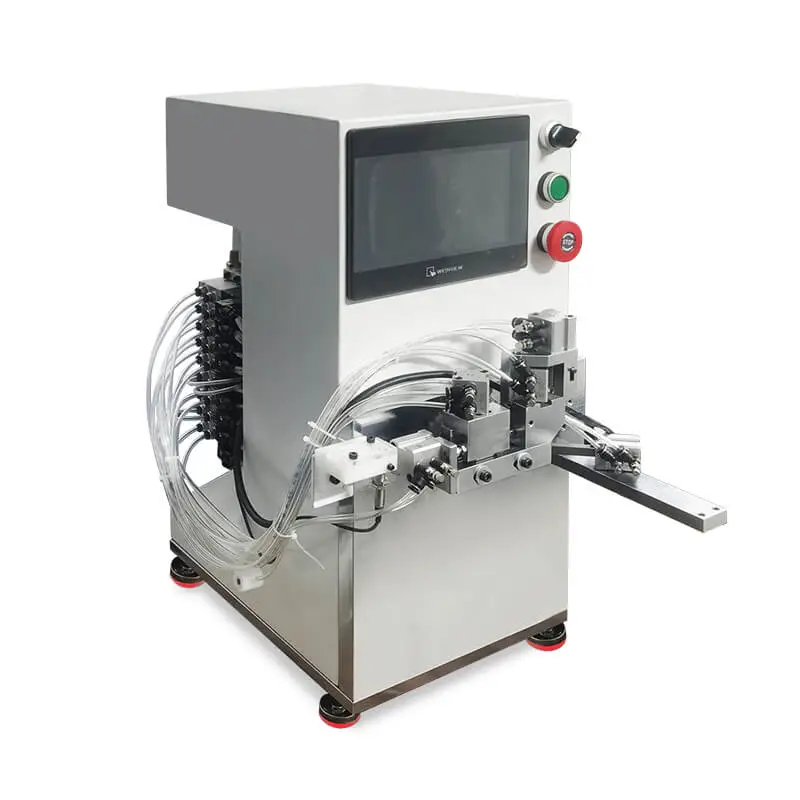
Solid decorative wirework (flower lines, spirals, custom wire patterns) → wire forming. SIBLE's flower line shaping machine, for example, automatically shapes gold, silver, and copper wire into flower-line and decorative patterns used in necklaces, bracelets, and earrings, with adjustable forming parameters for different wire sizes and materials.
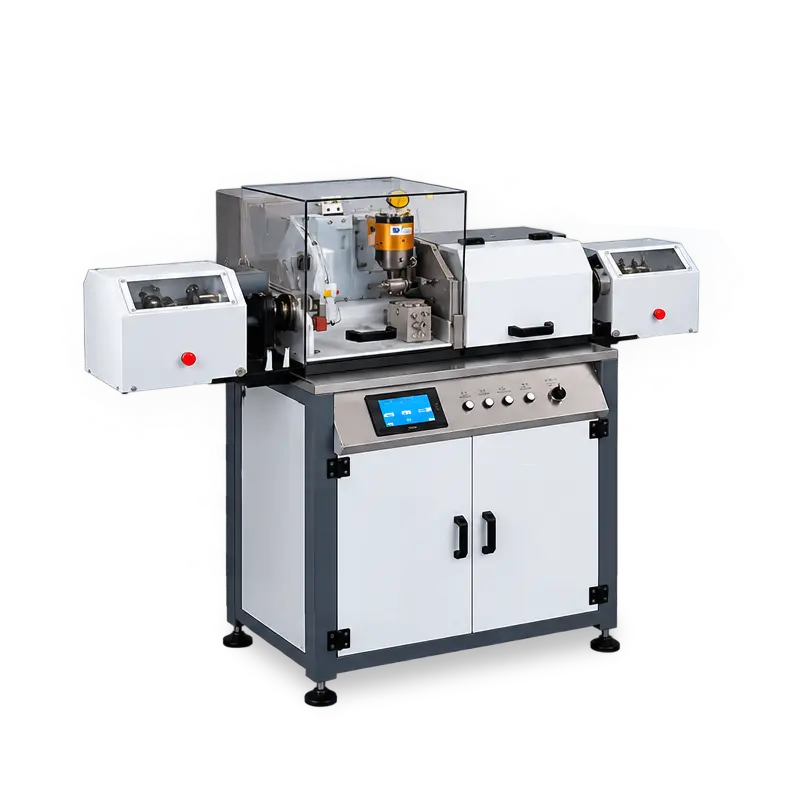
Hollow bangles, bracelets, and ring blanks → tube forming. Channel coiling and tube forming machines shape tube stock into bracelet, ring, and earring components, with speed control for both fine detailing and high-volume output.
Chain production feedstock → wire forming (for drawn wire cross-sections) feeding into chain machines.
Mixed production → look for a forming setup with fast die changeover so you can switch between wire and tube jobs without long downtime.
Selection Factors That Matter
Material Compatibility
Different precious metals and alloys behave differently under forming pressure. Make sure the machine handles your core materials (gold, silver, platinum, palladium, copper alloys) and their typical hardness ranges. Adjustable pressure and speed settings give more flexibility across materials.
Precision and Tolerance
Jewelry applications often demand tolerances within micron range. Look for:
Precise servo-driven control systems
Digital displays for setup and monitoring
Repeatability within ±0.01mm or better
Stable performance across long production cycles
Production Volume
Volume determines the right level of automation:
Small workshop (1–5 kg/day): manual or semi-automatic forming machines with quick changeover
Mid-size facility (5–20 kg/day): automatic forming machines with programmable cross-sections
Large factory (20+ kg/day): fully automatic forming lines with integrated feeding and collection
Setup and Changeover
Frequent cross-section changes are normal in jewelry production. Machines with fast-change or tool-free die systems significantly reduce downtime. Consider:
Time required to switch between cross-sections
Availability of pre-set or programmable profile parameters
Operator training requirements for setup
Automation and Integration
Modern forming machines offer features that improve efficiency:
Automatic feeding systems for continuous operation
Integrated length measurement and cutting
Data recording for quality control and traceability
Networking for production-line integration
Maintenance and Lifespan
Proper maintenance extends machine life and ensures consistent quality:
Daily: clean rollers and dies; check lubrication levels; inspect for wear
Weekly: check alignment and calibration; clean feeding mechanisms; inspect electrical connections
Monthly: inspect bearings and bushings; replace worn dies; check safety systems
Quarterly: comprehensive calibration; full system inspection; software updates if available
Following the manufacturer's maintenance schedule is essential for warranty and optimal performance. SIBLE provides detailed maintenance documentation and remote support for all forming equipment.
Frequently Asked Questions
Can one machine do both wire forming and tube forming?
Some machines can handle both solid wire and tube stock within their size range, but most factories optimize for one. The key difference is controlling the inside diameter for tube — if your products are hollow, choose a machine designed for tube forming.
What is the difference between forming and cutting?
Cutting removes material to separate or shape it; forming reshapes metal through mechanical deformation without removing material. Forming preserves material integrity — critical for precious metals where material savings matter most.
How small a tolerance can forming machines hold?
Modern servo-driven forming machines hold repeatability within ±0.01mm or better — sufficient for most jewelry applications, from chain feedstock to hollow bangle components.
Is tube forming more expensive than wire forming?
Tube forming equipment is often comparable in price; the material savings come from the hollow cross-section — less precious metal per piece. For hollow bangles and large components, this can significantly reduce material cost while maintaining the same outer dimensions.
Does SIBLE supply both wire and tube forming machines?
Yes. SIBLE offers wire forming machines for decorative wirework and tube forming machines for hollow components, plus a full jewelry forming machines range. Tell us your product and cross-sections for a recommendation.
Related Reading
Jewelry Wire Forming Machine for Gold & Silver — decorative wirework machines from SIBLE.
Jewelry Tube Forming Machine for Gold & Silver — tube forming for hollow components.
Jewelry Forming Machines — Full Range — browse all forming solutions.
Flower Line Shaping Machine — automatic decorative wire forming.
Wire Drawing Machine for Jewelry: A Complete Guide — how precision wire feedstock is produced.
Gold Jewelry Production Line: Machines & Workflow Explained — where forming fits in the full workflow.
Message Online


